"Something was fishy”: Abdulsalami recalls being locked up as Abacha died
By Victor Idajili
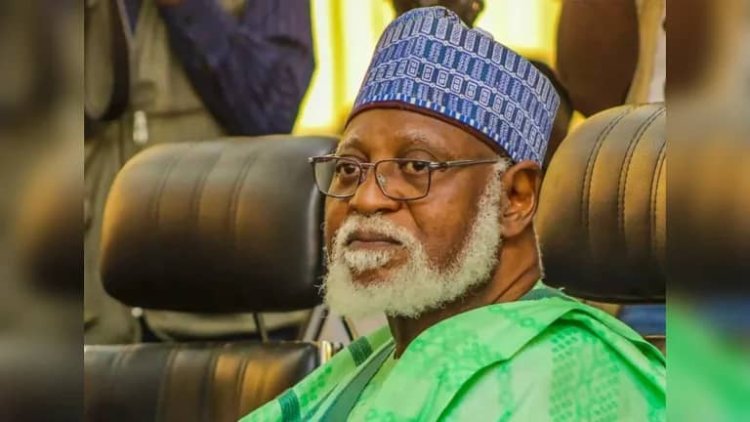
Retired General Abdulsalami Abubakar says he’s never shaken off the feeling that June 8, 1998 didn’t add up. In his new autobiography _Call of Duty_, the former Head of State reveals he and then Army Chief Lt-Gen. Ishaya Bamaiyi were locked in a Presidential Villa waiting room for nearly an hour before learning that Gen. Sani Abacha was dead.
The book, launched Saturday in Aso Rock to mark Abdulsalami’s 84th birthday, gives a first-hand account of the chaotic hours that led to Nigeria’s sudden change of leadership.
Abdulsalami writes that his day started with a call about his own retirement after 35 years in uniform. He was dreading another trip to Togo for an ECOWAS summit. Then another call came: Abacha wanted to see him.
“I didn’t wear my uniform. I wore a tracksuit and slippers and proceeded to the Presidential Villa,” he recalled. When he arrived, guards told him Abacha wasn’t in the office but to wait in the waiting room. Bamaiyi joined him.
“We waited for about an hour,” he wrote. “I decided to go and see Abacha by any means because I could not understand why we should be kept that long.” That’s when he realized the door was locked. “I asked Bamaiyi if he was aware that we had been locked inside. Something kept telling me that something was wrong but I could not place a finger on it.”
The door was eventually opened not by an aide, but by Inspector-General of Police Ibrahim Coomassie, who simply said “Let’s go” and broke the news: Abacha was dead.
Abdulsalami said he asked to see the body. “I entered the room and removed the covering. I was in shock at the sudden development.” What followed was a scramble. Top military figures — Al-Mustapha, Babagana Kingibe, Chief Justice Muhammadu Uwais — converged at the residence. The CJN’s advice: appoint a new Head of State first to avoid a vacuum, then inform the public.
But Abdulsalami accused Abacha’s “inner caucus” of having other plans. “They were more interested in who was going to be the next Head of State. Bamaiyi and I would not be involved in the process, according to their plan. They were preparing to pick the new Head of State from among themselves.”
As Chief of Defence Staff and next in rank after Abacha, Abdulsalami chaired the Provisional Ruling Council meeting. He told members Abacha had died, the family wanted burial in Kano, and the CJN advised against leaving a leadership vacuum. The meeting got tense. “Someone complained that we all knew the tenets of Islam and instead of going to bury Abacha, we were busy talking about who was going to be the next Head of State,” he wrote.
The PRC agreed to break for Abacha’s burial in Kano at 2am. Abdulsalami now believes that trip was a setup. “Little did we know that the burial was just a decoy to perfect whatever they had up their sleeves. While we were in Kano, they were already preparing to swear in their preferred choice, Admiral Mike Akhigbe.”
He says officers on ground had instructions “they should not allow any drama.” The delegation returned to Abuja around midnight and resumed deliberations.
The contest, he wrote, came down to him and Lt-Gen. Jeremiah Useni as the two most senior officers. “I won the vote. That was how I became the 11th Nigerian Head of State.” He later oversaw the transition that handed power to Olusegun Obasanjo on May 29, 1999.
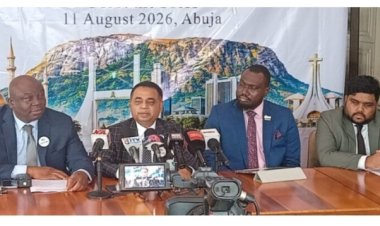
Call of Duty was presented alongside two other books at the 84th birthday event themed “The Legacy of a Statesman @84”. Vice President Kashim Shettima represented President Bola Tinubu as Special Guest. Gen. Yakubu Gowon chaired, and former South African President Thabo Mbeki delivered the keynote on democratic transitions.
Abacha ruled from November 1993 until his sudden death on June 8, 1998, about five years after taking power following the annulment of the June 12 election. Abdulsalami’s account adds a new layer to the mystery that still surrounds that night.