Only 36% of Africans Are Online, As Global Internet Users Hit 6 Billion
By Victor Idajili
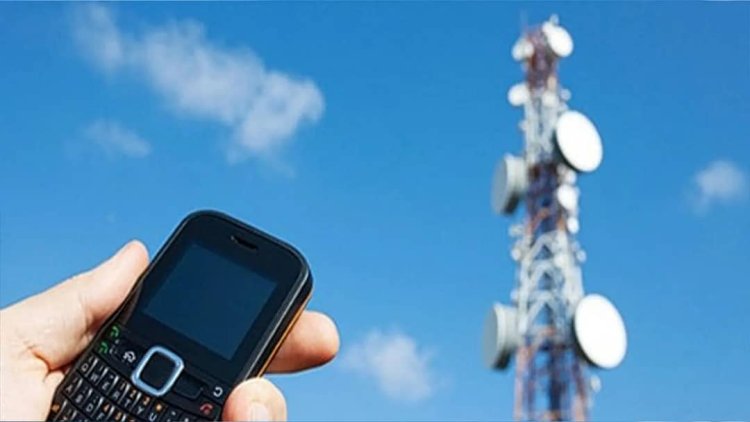
Nearly 3 out of every 4 people in the world are now connected to the internet, but Africa is still far behind.
According to the International Telecommunication Union’s “Facts and Figures 2025” report, 74% of the global population, about 6 billion people, were online in 2025. That’s up from 71% in 2024.
High-income countries are almost fully connected at 94%. Europe, the Americas, and CIS countries range between 88% and 93%. Asia-Pacific is at 77% and Arab States at 70%.
But more than 2.2 billion people remain offline, and most of them live in low- and middle-income countries. The ITU warned that without targeted action, the push for universal connectivity could stall.
Africa’s numbers tell a different story. Only 36% of people on the continent were online as of 2025 the lowest of any ITU region.
In Least Developed Countries, it’s 34%. In Landlocked Developing Countries, 38%. Growth is happening 7.4% yearly in LDCs and 5.5% in LLDCs but the gap is still huge. The ITU said “universal connectivity remains a distant prospect” for Africa because of poor infrastructure, high costs, and low digital skills.
Globally, 77% of men are online compared to 71% of women. Africa has the widest gap: just 31% of women use the internet versus 40% of men.
The continent’s gender parity score has improved from 0.70 in 2019 to 0.78 in 2025, but it still trails Europe, the Americas and CIS, where parity has been reached.
Young people are driving usage. Worldwide, 82% of people aged 15-24 are online compared to 72% of older age groups. In Africa, youth adoption is higher too, but overall numbers remain low. In low-income countries, young people are nearly twice as likely to be online as older adults.
Globally, 85% of urban residents are online compared to 58% in rural areas.
In Africa the divide is the widest in the world. 55% of people in cities use the internet, but only 21% in rural areas. That 2.6 ratio shows how infrastructure and cost barriers hit sparsely populated communities hardest.
Mobile broadband now covers 96% of the world’s population, and 5G reaches 55%. But in Africa only 12% have 5G access. For comparison, it’s 74% in Europe and 70% in Asia-Pacific.
Most of Africa still depends on 3G and 4G. 14% of Africans rely only on 3G. In rural Africa, just 57% are covered by 4G, leaving huge areas underserved. The ITU says without faster investment, Africa risks being left behind as the world moves to advanced mobile networks.
Internet prices are dropping globally, but in about 60% of low- and middle-income countries, data and devices are still unaffordable. For Africa, where incomes are lower and infrastructure is more expensive to build, affordability remains the biggest barrier keeping millions offline.