Reported cases of violence against women drop by 81% in one year, but advocates urge caution
By Victor Idajili
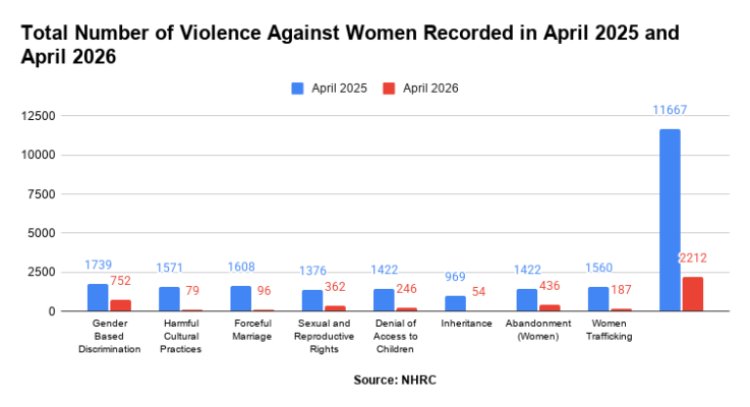
Nigeria saw a sharp drop in reported cases of violence and discrimination against women between April 2025 and April 2026, with NHRC data showing an 81% decline across major categories of abuse.
Reported incidents fell from 11,667 in April 2025 to 2,212 in April 2026. The data covers gender-based discrimination, harmful cultural practices, forced marriage, violations of sexual and reproductive rights, denial of access to children, inheritance abuses, abandonment, and trafficking of women.
The numbers suggest progress from efforts by government agencies, civil society groups and development partners to tackle sexual and gender-based violence, SGBV, and protect women and girls nationwide.
Gender-based discrimination stayed the most reported violation but still fell over 56%, from 1,739 cases to 752.
Other steep declines:
Harmful cultural practices like widowhood rites, FGM and discriminatory inheritance customs: 1,571 → 79 cases.Forced marriage, 1,608 → 96 cases.Violations of sexual and reproductive rights,1,376 → 362 cases .Denial of access to children, 1,422 → 246 cases .Abandonment, 1,422 → 436 cases. Inheritance-related abuses, 969 → 54 cases .Human trafficking, 1,560 → 187 cases
But Q1 2026 showed a spike before April’s drop.
The April decline followed a worrying rise in the first quarter of 2026. Gender-based discrimination cases climbed from 891 in January to 1,300 in February and 1,352 in March. Harmful cultural practices rose from 148 to 160. Forced marriage went from 182 to 211. Sexual and reproductive rights violations jumped from 448 to 677. Trafficking cases increased from 262 to 306, and abandonment complaints rose from 580 to 754.
That March surge raised fears among stakeholders that violence against women was getting worse. The sharp April drop now suggests interventions by authorities and advocacy groups may have helped curb reported cases.
Government, advocates urge sustained action.
Minister of Women Affairs and Social Development, Imaan Sulaiman-Ibrahim, warned that violence against girls, child marriage, poor access to education and family instability still threaten Nigeria’s social and economic future.
“Our mission is to move from data to dignity,” she said at an intergenerational dialogue. “We are acting with the speed and precision required to protect the over 100 million Nigerian women and girls whose futures depend on our resolve.” She noted abuse and educational exclusion remain widespread, especially in underserved communities, despite existing laws and policies.
Gender rights advocate Joyce Amadu said the 81% drop shouldn’t be mistaken for the end of the problem. Many cases still go unreported due to stigma, fear and poor access to justice. “Many of these abuses persist because society continues to normalise discrimination against women. We must begin to challenge harmful cultural practices, support survivors, and ensure perpetrators are held accountable,” she said.
Amadu called for stronger legal protections, better police response, more support services for survivors, and greater investment in girls’ education and women’s economic empowerment. “When women have access to education, jobs, and support systems, they are less vulnerable to forced marriage, trafficking, and other forms of exploitation,” she added.
Women’s rights advocate Adeola Adetola described the decline as “encouraging but not victory.” She warned progress could reverse without deeper reforms and consistent enforcement. “Many times, violence against women is often hidden, and many survivors never come forward. An 81% decline is significant on paper, but it does not mean the problem is solved. We need consistent enforcement of laws and continuous advocacy,” she said.
The NHRC figures point to gains, but advocates agree the work of changing norms, enforcing laws and supporting survivors is far from over.