2027: INEC Says Insecurity May Disenfranchise Voters
By Victor Idajili

The Independent National Electoral Commission (INEC) has raised the alarm that insecurity poses a serious threat to the 2027 general elections.
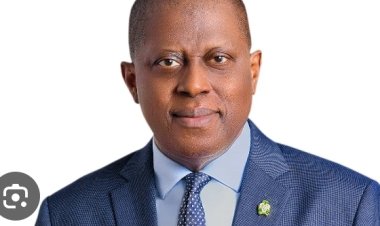
Chairman of the Commission, Prof. Joash Amupitan, disclosed this on Tuesday in Owerri, Imo State, during the 6th Conference and Retreat for Senior Police Officers.
Amupitan, a Senior Advocate of Nigeria, said if not checked, violence and insecurity in parts of the country could prevent many eligible Nigerians from voting in the 2027 polls.
He said beyond insecurity, logistics and inadequate funding for the lead security agencies could also undermine the elections if not properly handled.
“It’s a major source of concern for us. That can be a source of disenfranchisement of Nigerians, and we don’t want any Nigerian to be disenfranchised,” he said.
The INEC chairman said the Commission is working with the Nigeria Police, the Office of the National Security Adviser and other agencies to map out strategies for holding elections in volatile areas.
He disclosed that INEC would soon convene a meeting of the Inter-Agency Consultative Committee on Election Security (ICCES) to address security concerns ahead of the elections.
ICCES, he explained, was established after the 2011 post-election violence to coordinate election security among INEC and security agencies at federal, state and local government levels.
Amupitan assured Nigerians that the January 16, 2027 presidential and National Assembly elections and the February 6 governorship and State Houses of Assembly elections would be free, fair and credible.
He said the Commission has learnt lessons from five off-cycle elections it has conducted under his leadership, starting with the November 2025 Anambra governorship poll, the FCT Area Council, Osun and Ekiti governorship elections, and last week’s National and State Assembly by-elections in Gombe, Kano, Bauchi and Delta States.
According to him, none of the elections was declared inconclusive.
On vote-buying, the INEC chairman said the practice has shifted from polling units, making intelligence-driven enforcement critical. He noted that INEC lacks powers to arrest and investigate, but is working with security agencies and the office of the Attorney-General of the Federation to set up a task force to curb the menace.
He added that disputes from party primaries are for the courts to determine, but would not stop INEC from conducting elections.
Speaking on funding, Amupitan said although INEC’s funds are constitutionally a first-line charge on the Consolidated Revenue Fund, logistics, personnel deployment and security still require sustained financial support.
“Sometimes, it is not what you would like to do that you can do because of financial constraints,” he said.
He urged police officers to maintain professional neutrality, called on politicians to focus on issue-based campaigns rather than personal attacks, and warned against “do or die” politics.
In her remarks, NBA President, Oyinkansola Badejo-Okusanya (SAN), urged the police to give INEC maximum support to deliver credible polls in 2027.