Tinubu marks 27 years of democracy, pledges economic freedom as next frontier
By Victor Idajili
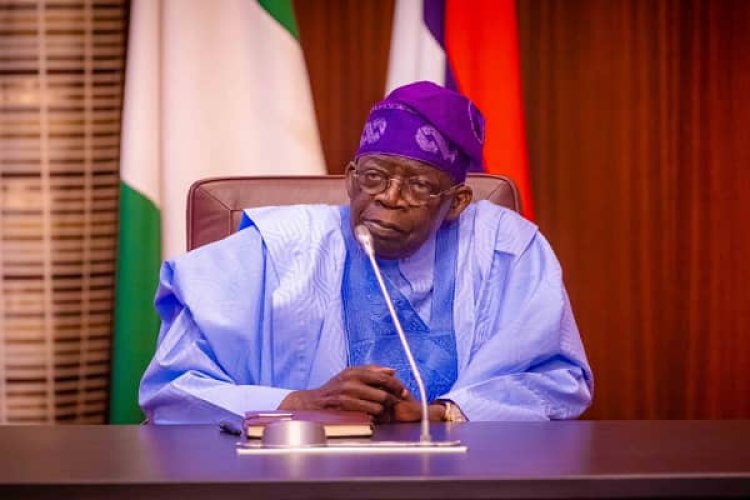
President Bola Ahmed Tinubu on June 12, 2026 told Nigerians that while political freedom was won 27 years ago, the current generation must now fight for economic prosperity as the country celebrates uninterrupted civilian rule.
In his Democracy Day address, Tinubu mixed progress reports with hard reminders. He said democracy must be protected, insecurity confronted, and citizens united behind the reforms reshaping Nigeria’s economy.
Democracy at 27: “We bend, we bleed, but we do not break”
The President noted that Nigeria has now sustained 27 consecutive years of civilian government — the longest democratic run in its history.
Though he admitted democracy is imperfect, Tinubu insisted it must be defended and strengthened. He called on INEC, security agencies and political parties to ensure credible elections, with upcoming polls in Ekiti and Osun as the next test.
He also praised institutions like the National Assembly, judiciary, media and civil society as the pillars holding democracy up, and urged Nigerians to criticise government policies constructively without losing faith in the country. A special appeal went to the youth: stay, innovate, work and vote instead of “japa”.
Tinubu commended the military, police and intelligence services for their sacrifices, but acknowledged recent abductions in Oyo and Borno showed insecurity remains a serious threat.
To tackle it, the 2026 budget earmarks ₦5.41 trillion for defence and security — the highest allocation ever. Over 50,000 new police officers and thousands of military recruits are being added.
The President claimed measurable progress since 2015: terror-related deaths down 81%, more than 13,000 terrorists neutralised, and insurgent operations significantly disrupted. More than 124,000 insurgents and dependents have also surrendered through deradicalisation programmes.
His message to bandits and terrorists was blunt: surrender within a limited amnesty window or face decisive force. “Crime has no ethnic identity,” he said, pushing for national unity over division.
Shifting to the economy, Tinubu said democracy must be felt in people’s daily lives — jobs, prices, power, living standards. He defended recent reforms as “necessary, not optional” to fix strained public finances and restore stability.
Government, he said, has seen increased federation revenues, improved fiscal transparency and renewed investor confidence. In power, steps include signing the Electricity Act, expanding off-grid and mini-grid solutions, and tackling metering deficits and sector debt.
“If June 12 gave us political freedom, this generation’s task is economic freedom,” Tinubu declared.
Honours for June 12 heroes
The President paid tribute to icons of the pro-democracy struggle including MKO Abiola, Kudirat Abiola, Gani Fawehinmi, Bola Ige, Alfred Rewane, Abraham Adesanya, Anthony Enahoro, Balarabe Musa, Beko Ransome-Kuti and Frank Kokori.
He also announced national awards for Nigerians who suffered persecution, exile, jail or indignities for democracy. Among those honoured were Ayoka Lawani, Tunde Fagbenle, Oladele Alake, Olatunji Bello, Louis Odion, Sam Omatseye, Joe Igbokwe, Richard Akinnola, Dr Joe Okei-Odumakin, Chief Ayo Opadokun and others.
“Soldier-democrats” of the June 12 struggle were also recognised, including Maj-Gen MA Garba, Col Sambo Dasuki, Col Lawan Gwadabe, Brig-Gen Lawal Jaafaru Isa and several others.