Stock market gain hits N30tr
By Victor Idajili
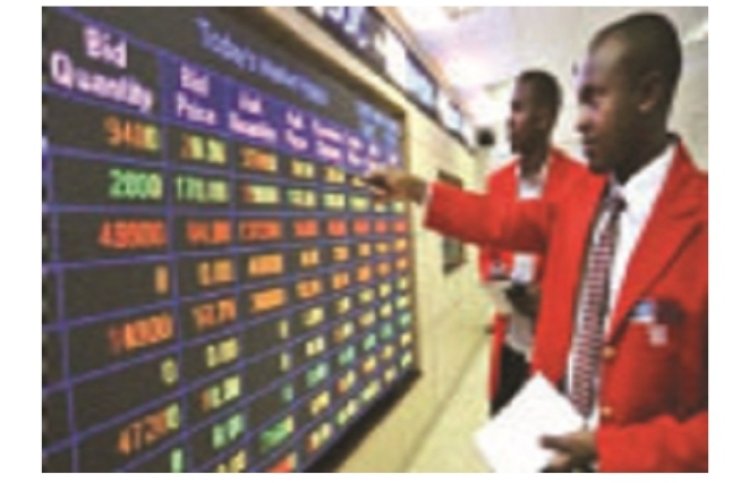
The Nigerian stock market crossed another milestone yesterday as the benchmark index for the nation’s equities market hit the 200,000 mark.
The market opened the year at 155,613.03 points.
The extended rally at the Nigerian Exchange (NGX) implied that investors have earned about N29.29 trillion in net capital gains so far this year. This represents a year-to-date return of 29.47 per cent.
The NGX closed 2025 with a full-year average return on equities of 51.19 per cent, equivalent to net capital gain of N32.13 trillion.
The All Share Index (ASI)- the value-based common index that tracks all share prices at the NGX, rose from its opening index of 198,407.30 points to close yesterday at 201,474.89 points. Aggregate market value of all quoted equities also increased simultaneously from its opening value of N127.36 trillion to close at N129.33 trillion. It had opened the year at N99.376 trillion.
Group Managing Director, Nigerian Exchange Group (NGX Group) Plc, Temi Popoola, said the 200,000 milestone was a sign of growing confidence in Nigeria’s capital market.
He said: “Nigeria’s ongoing reforms are strengthening domestic capital formation, and the market is responding positively. Increased participation by local investors, improving corporate fundamentals, and continued market modernisation are reinforcing the role of the capital market as a catalyst for long-term wealth creation and sustainable economic growth”.
Speaking at the Nigeria–United Kingdom Investment Roundtable organised by the Nigerian Investment Promotion Commission (NIPC) in collaboration with the Commonwealth Enterprise and Investment Council in London, Popoola said reforms by the President Bola Ahmed Tinubu’s administration were already strengthening domestic capital formation and positioning the country for deeper global investment partnerships.
Drawing comparisons with countries such as Indonesia, Brazil and India, Popoola noted that economies that implemented structural reforms often witnessed strong domestic capital mobilisation and strengthened corporate balance sheets.
According to him, Nigeria is currently experiencing a similar trend as local investors and corporates increasingly respond to policy reforms.
He said: “The real test of reforms is what local capital does and how domestic corporates respond. In Nigeria today, local capital is playing a very strong role. Markets were up more than 50 per cent last year, issuers are raising new capital, retail investors are returning to the market, and corporate balance sheets and governance standards are improving”.
He also highlighted the strong capital market relationship between Nigeria and the United Kingdom, noting that collaboration between the Nigerian Exchange Group and the London Stock Exchange has helped facilitate cross-border capital raising for corporates in both jurisdictions.
Looking ahead, Popoola said Nigeria’s capital market is positioning itself to support larger transactions and broader wealth creation opportunities.
“We see a future where capital markets go beyond facilitating capital raising to supporting business expansion and wealth creation for Nigerians,” Popoola said.
Chief Executive Officer, Nigerian Exchange (NGX) Limited, Jude Chiemeka, attributed the 200,000 milestone to sustained demand and active participation across the market.
According to him, crossing the 200,000-point mark reflected strong investor engagement and consistent demand across key sectors.
“At Nigerian Exchange Limited, we remain focused on deepening market liquidity, enhancing trading infrastructure, and ensuring efficient price discovery to support a resilient and transparent marketplace,” Chiemeka said.