Tension Rises in Osun Ahead of August 15 Governorship Election
By Victor Idajili
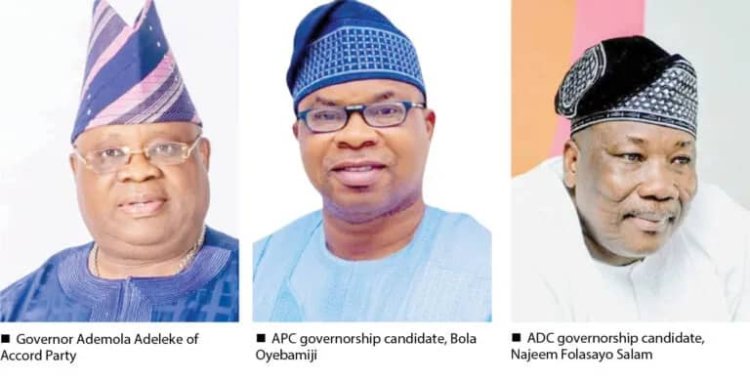
Ahead of the August 15 governorship election in Osun State, the political atmosphere has grown tense, with accusations, arrests, allegations of intimidation and fears of violence dominating public conversation.
Instead of debates on education, health, agriculture and jobs, violence and security issues have taken center stage. Residents say the "State of the Living Spring" is currently gripped by fear and uncertainty.
Arrests of political opponents, allegations of police bias, detention of party members, clashes among supporters, and questions about police neutrality have all featured prominently in the buildup to the poll.
While elections in Nigeria are often heated, developments in Osun are raising fresh concern. The state has a history of fiercely contested governorship races, and observers warn that without responsible conduct from political actors, security agencies and electoral officials, avoidable violence could occur again.
Political analysts note that while disagreement is part of democracy, the tone ahead of this election suggests the stakes have risen beyond normal rivalry.
One of the most troubling aspects of the campaign has been allegations of politically motivated attacks.
Governor Ademola Adeleke, the incumbent, has repeatedly accused opposition elements of sponsoring attacks on his supporters. He claims several members of his camp have been killed and dozens injured in recent months. The governor also alleges that scores of his supporters have been arrested and detained outside Osun State in what he describes as an attempt to weaken his structure ahead of the election.
Security agencies have defended their actions, saying arrests are based on intelligence and ongoing investigations into electoral offences and other crimes. The police insist investigations are being conducted within the law and that no one is being targeted because of party affiliation.
The conflicting accounts have deepened public suspicion.
Tensions boiled over at a recent stakeholders’ meeting organised by the Independent National Electoral Commission, INEC. The African Democratic Congress, ADC, accused members of the All Progressives Congress, APC, and Accord Party of disrupting proceedings through intimidation and shouting. According to the ADC, the atmosphere was so hostile its representatives could not speak and had to submit their observations in writing.
In June, two deaths were recorded. An Accord Party supporter, Ajayi Aderogba popularly known as Rogba, was allegedly shot dead in Esa Oke. His killing sparked protests in Obokun Local Government Area and triggered blame between Accord and APC camps. Residents said he was killed while preparing for a rally in support of Adeleke’s second-term bid.
About two weeks ago, two APC members were also reportedly killed and several others injured in a coordinated attack in Osogbo. The APC alleged that those behind the attack were linked to the governor’s administration.
Adeleke, elected on the platform of the Peoples Democratic Party, PDP, in 2022, is seeking re-election. He faces a strong challenge from the APC whose candidate is Asiwaju Munirudeen Oyebamiji, former Managing Director of the Nigeria Inland Waterways Authority, NIWA.
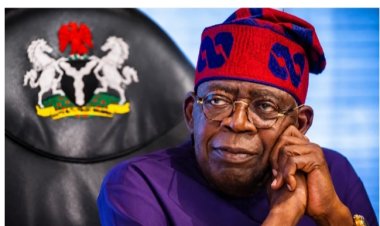
A controversial development has been the endorsement of President Bola Tinubu for a second term by both the Accord Party and the governor. This fueled speculation that the president might be backing Adeleke. The governor has, however, alleged that federal institutions are being deployed against his administration, accusing senior federal officials of influencing security operations in Osun.
These claims remain politically contested, but they have intensified debate over the neutrality of federal institutions during elections.
Another flashpoint is the alleged role of transport unions. The governor recently ordered the suspension of activities of the National Union of Road Transport Workers, NURTW, in the state. In a statement by the Commissioner for Information and Public Enlightenment, Kolapo Alimi, the government said the decision was to restore sanity to motor parks.
Adeleke directed police and other agencies to stop all NURTW activities in parks across the state, clarifying that the parks themselves would remain open.
The national president of NURTW, Musiliu Akinsanya also known as MC Oluomo, rejected the order, saying the governor had no power to dissolve the union.
Sources say the suspension followed reports that a section of the union to be used for election logistics might have been compromised, prompting the governor to act proactively.
Osun’s electoral history explains the current anxiety. The 2022 election that brought Adeleke to power, defeating then-incumbent Adegboyega Oyetola, was also marked by tension. Several past polls ended in litigation or violent clashes.
Speaking at a peace summit in Osogbo organised by the National Peace Committee, Adeleke said the state was facing “a progression towards genocide,” alleging his government and Accord Party members had been under “police sanctioned violence and intimidation” for three months.
He said eight Accord Party members had been killed and more than 20 injured, with no prosecution. He also claimed over 60 party members were in detention without charge, and cited the arrest of Secretary to the State Government, Teslim Igbalaye, after a raid on his home without a court warrant.
“Under which law can a state police commissioner take instructions from Mr Gboyega Oyetola to arrest Accord Party members in Osun State and move them to Abuja and hold them in prisons without any charge?” Adeleke asked.
The Nigeria Police Force faces the most scrutiny. Both ruling and opposition parties are demanding neutrality.
The police recently arrested Igbalaye and five commissioners. The command’s spokesperson, Abiodun Ojelabi, said the raid followed intelligence on criminal gangs in Osogbo. Items recovered, according to police, included N4,810,500 in cash, a laptop, photocopier, printer, two PVCs and a voter register.
The state government rejected the claim, alleging the raid was carried out without a search warrant and that family members were also taken away. Alimi described it as “a campaign of repression” and “unprofessional conduct by the police in support of the state APC.”
INEC Chairman, Prof. Joash Ojo Amupitan, says the commission is ready for a free, fair and credible election. Speaking at the stakeholders’ forum in Osogbo, he said logistical, technological and operational arrangements were complete.
To boost participation, PVC collection was extended to Friday, July 31, 2026. Amupitan said 322,822 new voters, representing 62%, had collected their cards. A mock accreditation using BVAS is also scheduled for Saturday, August 1 across 12 LGAs.
Observers say transparency will be key, and that the Osun poll will serve as a test ahead of the 2027 general elections.
Three parties are expected to lead the contest: Accord, ADC and APC.
Accord Party: Adeleke is running on incumbency and continuity. His administration has highlighted road projects, workers’ welfare, education and health. The challenge is to turn that into votes amid the current tension.
ADC: The party has gained momentum with the defection of former Governor Rauf Aregbesola. Its candidate, Najeem Salaam, is leveraging Aregbesola’s grassroots network. Aregbesola has described ADC as the main force in Osun and expressed confidence in Salaam’s chances.
APC: Despite internal realignments, the party retains strong structures across LGAs. It believes dissatisfaction with the current administration could work in its favor. The APC has denied allegations of sponsoring violence or influencing security agencies.