NFF President Gusau, Board Members Resign Amid Football Crisis
By Victor Idajil
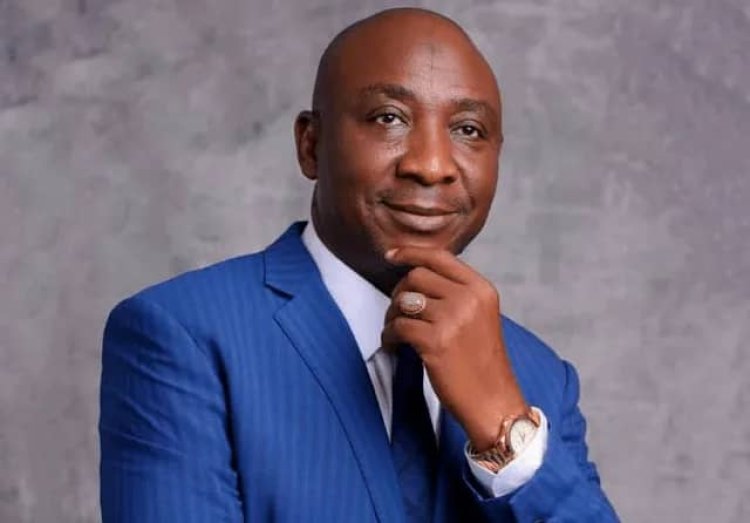
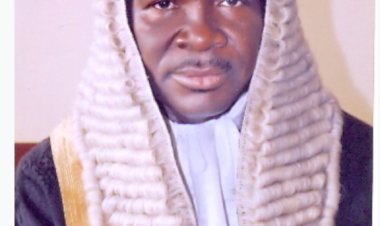
Nigerian football entered a new phase yesterday as Nigeria Football Federation President, Ibrahim Musa Gusau, resigned alongside members of his board. The move effectively ended an administration elected in October 2022 after months of mounting pressure over poor results and governance issues.
Gusau announced the decision at the NFF headquarters in Abuja, before staff and journalists.
“I consulted, I had to inform them, and I decided to resign as president of the NFF. My resignation is intended to give way to a comprehensive and orderly reform process aimed at addressing the longstanding institutional, governance and developmental challenges confronting Nigerian football,” he said.
“I have decided to resign my position. I have also advised my board members to resign.”
The resignation followed a string of setbacks that put the NFF leadership under intense scrutiny.
The Super Eagles failed to qualify for the 2026 FIFA World Cup, after also missing out on the 2022 edition. Back-to-back failures sparked national debate about the direction of the game.
The Super Falcons also suffered a historic blow by failing to qualify for the 2027 FIFA Women’s World Cup, ending Nigeria’s record of appearing in every edition since 1991. For a team long regarded as Africa’s most successful women’s side, the miss damaged one of Nigeria’s strongest sporting brands.
Age-grade teams also struggled. The U17 and U20 sides, traditionally Nigeria’s pipeline for senior talent, showed declining consistency, raising questions about the development system.
Financial questions added to the pressure. There were concerns over the management of government intervention funds meant to clear outstanding payments to national team members. Reports said security and anti-corruption agencies were examining documents relating to the funds. The DSS, EFCC and ICPC were all linked to scrutiny of the federation’s finances, though the exact figures and scope of investigations remain unclear.
Former internationals, administrators and fans also increased calls for accountability, questioning whether the federation had the right structures to sustain success.
To respond to the poor performances, the NFF set up a fact-finding committee led by former General Secretary Ambassador Fanny Amun. He resigned shortly after submitting the report, citing the need to protect the committee’s independence. That move further fuelled doubts about whether reforms would be implemented.
With an elective congress earlier scheduled for September 27 in Lafia, Gusau had been preparing for another term. However, reports said members of the 13-man Executive Committee were considering mass resignation, with eight reportedly ready to quit. Gusau’s advice to the entire board to step down appears to have accelerated the collapse.
The National Sports Commission is now central to the transition. There is talk of a possible three-month normalisation committee to oversee the NFF and prepare for fresh elections. The NSC denied reports that the federal government ordered the resignations.
Officials worked to secure a voluntary exit to avoid breaching FIFA rules against government interference, which could attract sanctions including a suspension from international competitions.
President Bola Tinubu has now directed a comprehensive reform of Nigerian football. In a statement by his Special Adviser on Information and Strategy, Bayo Onanuga, the president said the reform must address weaknesses in governance, administration, stakeholder representation, development pathways, domestic competitions and accountability.
“Football, Nigeria’s most popular sport and the greatest beneficiary of public support, investment and national attention, has continued to struggle basically due to structural deficits within the system,” Tinubu said.
He directed the NSC Chairman to work with the NFF Secretariat and stakeholders to ensure continuity while engaging FIFA and CAF.
An emergency NFF Congress has been summoned in Abuja. Representatives from State FAs, clubs, coaches, players and referees are expected to decide how the federation will run during the transition and what happens to the suspended election timetable.
Reactions have been mixed. Former Super Eagles captain Segun Odegbami said the resignation removes the risk of a FIFA ban and creates space for reforms.
“His resignation removes the whole issue of FIFA ban and provides the opportunity for us to clean up whatever it is that we are complaining about,” he said.
But former Gombe FA chairman Ahmed Shuaibu Gara-Gombe warned the approach could create new problems.
“The power now goes back to the congress; the powers that have been forcing him to resign. It is a wrong approach. This move may backfire and put Nigeria in crisis. You don’t clear a system by asking all the board members to resign including the General Secretary. So, who will now inform FIFA of the latest development?”
Other voices, including former Sokoto FA chairman Dr. Danladi Bako and ex-NTA DG Yakubu Ibn Mohammed, had earlier called for Gusau’s exit and for an independent review of NFF administration and finances.
The NFF has also moved to ensure continuity after the resignation of General Secretary Dr Mohammed Sanusi. Deputy General Secretary Dr Emmanuel Ikpeme is set to take over in an acting capacity.