INEC Admits Voter Register Still Has Names of Dead Nigerians
By Victor Idajili
The Independent National Electoral Commission, INEC, says its voter register is bloated with names of people who have died, moved abroad, or never existed in the first place.
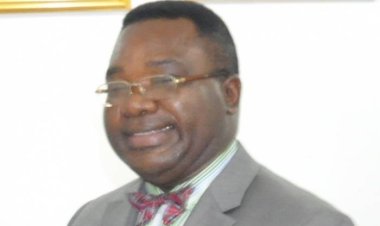
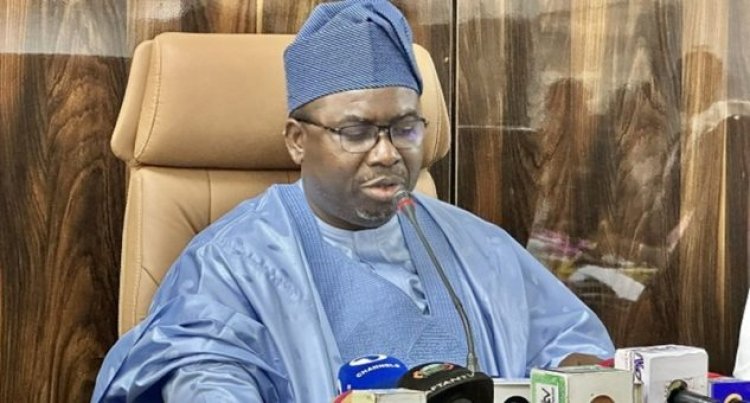
INEC Chairman, Prof. Joash Amupitan, raised the concern yesterday during a visit by the Director-General of the National Orientation Agency, NOA, Mallam Lanre Issa-Onilu, to the Commission’s office in Abuja.
According to INEC, over 93 million Nigerians were on the register used for the 2023 general election. With continuous voter registration still ongoing and set to close on July 10, another 3 million names may be added.
But Amupitan said the list has not been cleaned up since it was compiled in 2011.
“You can think of family members you know have died whose names are still on the register and are counted when we talk about voter turnout,” he said.
He explained that before 2011, when digital registration began, “somebody could write 50 names and just give them to you to register. Such names might not belong to existing persons. Those names are still on the register.”
Amupitan said he tried to review the register earlier this year but backed down after the opposition raised suspicions about his motive.
He noted that INEC can use the “claims and objections” process, where citizens flag dead or relocated voters at their polling units. But few Nigerians show up to do it.
“This is the type of engagement that we need to push hard,” he said.
Amupitan linked the issue to Nigeria’s persistently low voter turnout. “The numerical integrity of the register cannot be guaranteed unless it is regularly updated,” he added.
The INEC boss said technology alone cannot fix voter apathy. He cited INEC’s investment in BVAS machines and the IReV portal, and pointed to the February FCT Area Council election and June Ekiti governorship poll as proof that logistics and results transmission are improving. Both recorded over 90% early opening of polling units and fast uploads to IReV.
“But all of these mean nothing if citizens remain detached, uninformed, or cynical,” he said.
“That is where NOA comes in. INEC is the umpire. NOA is the custodian of the values that make people respect the rules. We need a grassroots voter education campaign that tells people not just when to vote, but why their vote matters and how BVAS and IReV have ended ballot box snatching and manual result writing.”
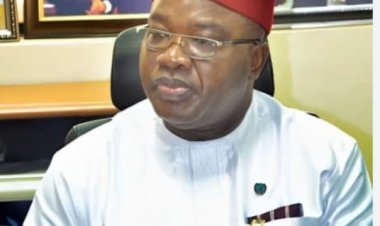
Issa-Onilu said complaints from the last three elections had reduced, but more civic engagement is needed.
“Democracy is the bedrock on which the country survives or fails,” he said. “If there is anything we cannot toy with, it is citizens’ civic right to decide their leaders. We all have a responsibility to protect it.”
He also noted that youth participation rose in 2023, but was overshadowed by distractions that should not have dominated the process.
INEC says it will work with NOA to take voter education directly to rural farmers, market women, and disillusioned urban youths in languages they understand, ahead of the 2027 general election.