Cholera surges in Borno, spreads to Plateau as northern states ramp up prevention
By Victor Idajili
A water-borne disease is hitting parts of northern Nigeria again, killing people and infecting thousands. Borno and Plateau are the hardest hit, while other states are stepping up surveillance to stop outbreaks before they start.
Health experts say the flare-ups highlight Nigeria’s long-standing problems: lack of clean water, poor sanitation, weak hygiene, mass displacement, and fragile public health systems. They warn that without urgent prevention, more states could see cases rise in the coming weeks.
While Plateau’s outbreak is still relatively contained in Mangu LGA, Borno is dealing with a major emergency. Médecins Sans Frontières reports 35 deaths and 3,646 new cholera infections in just one week.
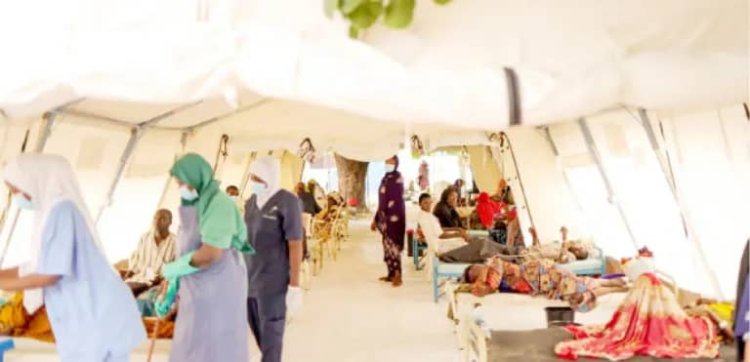
Between early May and June 9, Borno recorded 74 deaths and 7,850 suspected cases across 12 local government areas. On June 5 alone, treatment centers admitted more than 500 suspected patients — the highest daily number since the response began. Maiduguri metropolis remains the epicenter, accounting for over half of all cases.
The situation is especially dire in Monguno’s IDP camp. Health workers there recorded 296 suspected cases in three days, from June 11 to June 13: 48 cases on the 11th, 68 on the 12th, and 180 on the 13th. Most patients are women and children, and about 90% came from IDP camps in the area.
A health worker said many people delayed seeking care, treating diarrhea at home with drugs like Flagyl and tetracycline before arriving at facilities. Some died at home. “The influx from the IDP camp has created panic within the community,” the worker said. The outbreak has persisted for over a month despite interventions by the state government and partners.
Resident Yagana Lawan described how quickly it hits: “He started vomiting and became very weak. Later, diarrhoea followed. We rushed him to General Hospital Monguno, where he was referred to the cholera treatment centre.”
Plateau’s Commissioner for Health, Dr Nicholas Baamlong, confirmed at least 5 deaths from cholera in Mangu LGA. Officials have logged 52 suspected cases, with 11 patients currently receiving treatment. Communities affected include Pushit, Mangu I and Mangu II. Case numbers are far lower than Borno’s, but officials are moving fast to contain spread.
Public health experts say the outbreaks aren’t random. Dr Aliyu Isah noted cholera “thrives where people lack access to safe drinking water and adequate sanitation facilities.” In Plateau’s rural areas, open defecation and poor water sources increase contamination risk during the rainy season.
In Borno, displacement makes things worse. “In emergency and humanitarian settings, cholera spreads very quickly because many people live in crowded environments with limited access to clean water and sanitation facilities,” said Godwin Ekuwke of Kubwa General Hospital. Shared water points and overstretched latrines in IDP camps create perfect conditions for transmission.
Climate expert Grace Jegede added that extreme weather is making outbreaks more frequent. “During the rainy season, floodwaters frequently contaminate drinking water sources with human waste. Communities relying on untreated water become highly vulnerable.”
Though Benue has no unusual rise in cases, Commissioner for Health Dr Paul Ogwuche said rapid response teams are on alert, medical supplies are pre-positioned, and public campaigns on handwashing and safe water are ongoing. The state is also coordinating with the Nigeria Centre for Disease Control and Prevention.