FG Agencies Budget Nearly N400bn for Mosques, Palaces, Halls in 2026
By Victor Idajil
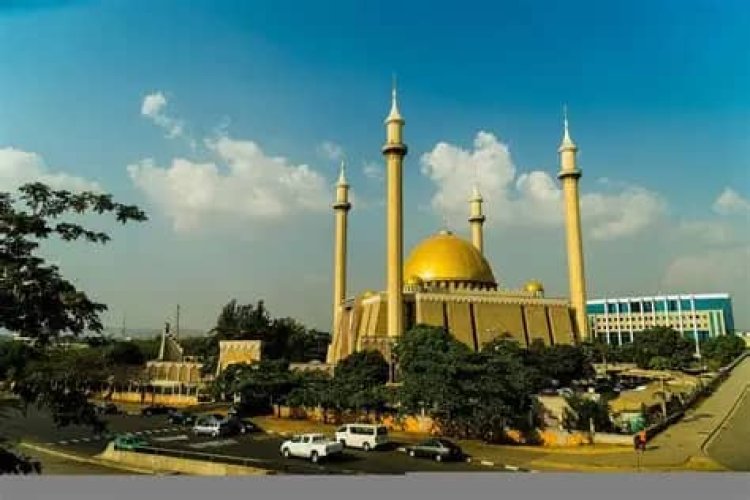
About 78 Ministries, Departments and Agencies of the Federal Government have earmarked close to N400 billion in the 2026 budget for the construction and rehabilitation of community halls, mosques, traditional rulers’ palaces, village market squares and civic centres.
Findings show that more than half of the N400 billion was allocated to projects described as non-developmental. These include supply of grains and motorcycles, sponsorship of community thrift societies, construction of museums and mini-stadia, and supply of tricycles, popularly called ‘Keke Marwa’, to communities.
Some of the MDAs with such provisions include the Ministry of Defence Headquarters, Nigerian Air Force, Air Power Centre of Excellence, Nigerian Defence Academy, Technical Aid Corps, Foreign Mission, Federal Ministry of Information and National Orientation, Federal College of Land Resources Owerri, Institute of Agricultural Research and Training Ibadan, and the Office of the Auditor-General for the Federation.
Others are the Federal Ministry of Industry, Trade and Investment, Federal Institute of Industrial Research Oshodi, National Building and Road Research Institute, National Productivity Centre, Industrial Arbitration Panel, Industrial Training Fund, National Agricultural Extension and Research Liaison Services Zaria, and Federal Cooperative College Kaduna.
Critics say many of the items do not match Nigeria’s most urgent priorities given current fiscal realities.
Analysts argue that spreading hundreds of billions across numerous small projects deprives citizens of strategic public investment. They say funds locked in fragmented projects could be better used for healthcare, education, security, roads, power and other infrastructure with wider impact.
“The proliferation of these relatively insignificant projects not only weakens fiscal discipline but also limits the government’s ability to deliver quality public services,” one analyst noted. “The opportunity cost is enormous, as scarce public resources are diverted from transformational national priorities to projects that frequently lack transparency, adequate oversight, or measurable developmental impact.”
Experts also flagged budget items that appear unrelated to the core mandates of some MDAs.
For example, the National Building and Road Research Institute, Lagos, has provisions for the construction of village halls in Akukwa, Anambra State; an international market in Birniwa, Jigawa State; traditional rulers’ palaces at Sarkin Wuse, Osokodoko and Osana in Rivers State; and the construction and refurbishment of the palace of the Agbana of Isanlu in Kogi State.
Other items include market stalls in Gubio, a multipurpose hall in Sanga, Kaduna State, and remodelling of five mosques in Izalla and Zawiya Centre in Kebbi, Ikole in Ekiti, and Mangadu and Samani in Jigawa. These items alone are put at over N4 billion.
The National Productivity Centre’s budget also contains unusual items such as support for Ijaw musicians, construction of an Emir’s palace in Nguru/Yusufari/Machina/Karasuwa in Yobe State, an econometrics laboratory in Ekiti State, refurbishment of Obas’ palaces at Ado Odo, Yewa and Ajilefe in Ogun State, and construction of an abattoir in Akko, Gombe State.
The National Mathematical Centre, Nigeria’s top institution for mathematical research, is also slated to fund the construction of a Sociology Department building at Ahmadu Bello University, Zaria, which many say falls outside its mandate.
Consultant economist and former central banker, Chukwunonso Ihuma, blamed poor oversight by the National Assembly for the trend.
“All these are down to poor oversight by the National Assembly. In most cases, they are even the ones inserting, smuggling and padding these budgets,” he said.
He argued that the Assembly often increases budgets sent by MDAs and uses the opportunity to insert projects with little impact.
“This explains why we have to go back to zero budgeting. We have to start from scratch. The Director-General of the Budget Office of the Federation should have the powers to discard any item that has no relevance to Nigerians. Markets are naturally meant to be handled by subnationals such as states and local governments, and traditional rulers should fix their palaces. Civic centres are projects done by village unions,” he said.
Zero-based budgeting requires that all expenses be justified from scratch each period instead of adjusting previous budgets.
President Bola Tinubu signed the 2026 Appropriation Bill in April, with aggregate expenditure of N68.32 trillion. He also signed an extension for the 2025 budget implementation to June 30, 2026. In July, the Senate further extended the capital component of the 2025 budget to September 30, 2026, to avoid project abandonment.
Analysts have described the 2026 budget assumptions as ambitious. Revenue is projected at N36.87 trillion, with a large deficit to be funded by borrowing. Oil price benchmark was raised to $75 per barrel from $64.85, and oil production target set at 1.84 million barrels per day. GDP growth is estimated between 4.28% and 4.68%, while debt servicing is put at N15.81 trillion.
“The stoppage of Ways and Means has created a big hole for the current government,” said Dr. Muda Yusuf, CEO of the Centre for the Promotion of Private Enterprise. “We are still struggling with the 2025 budget, yet we are still talking about the 2026 budget. Poor budgeting erodes the confidence of stakeholders.”
Media strategist Umar Sani noted that even when such projects are in the budget, the executive sometimes does not implement them, which often leads to disagreements with lawmakers.
“Good leaders have, on several occasions, turned down budgets riddled with insignificant items,” he said.