1.34 Million Nigerian Denied Visa Applications by the UK in 21 Years
By Victor Idajili
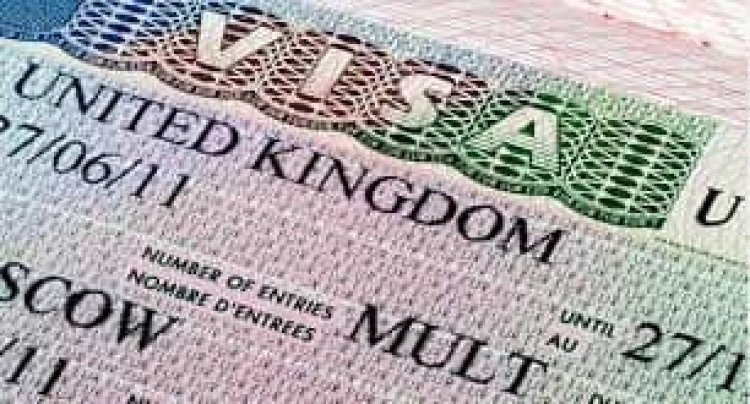
At least 1.34 million Nigerian visa applications were turned down by the United Kingdom between 2005 and the first quarter of 2026, according to official UK Home Office data.
That figure puts Nigeria second globally for total UK visa refusals — behind only India and ahead of countries like Pakistan and China. Nigerians also made up 44.4% of all UK visa rejections from Africa during that period.
It’s not just refusals. The UK granted 2.72 million visas to Nigerians in the same 21 years. That’s the third-highest number for any nationality worldwide, after India and China.
Nigeria also received more UK entry visas than any other African country. South Africa got 1.63 million and Egypt 695,606 over the same period.
The numbers come from the UK Home Office’s entry clearance datasets covering Q1 2005 to Q1 2026, covering visitor, study, work, family and other routes.
Out of about 4.09 million Nigerian applications, 4.06 million got a final decision. Nigeria’s overall refusal rate was 33.1%, more than double the UK’s global average of 14.8%.
In total, Nigeria’s 1.34 million refusals accounted for 15.2% of all 8.82 million UK visa rejections worldwide. Put differently, roughly 1 in every 7 UK visa refusals went to a Nigerian, even though Nigerians filed only 6.8% of all global applications.
Visitor visas were the biggest category. Of the 1.34 million Nigerian refusals, 1.12 million — 83.8% — were visitors, with a 37.1% refusal rate over the full period.
Study visas: 130,712 refusals at 20.5%.
Work visas: 41,410 refusals at 16%.
Family visas: 12,217 refusals.
The trend continued recently. In 2025, 66,143 visitor applications were refused against 105,039 granted — a 38.6% rejection rate. By Q1 2026, another 13,779 visitor visas had been refused at 37.5%.
Refusals were toughest in the mid-2000s. In 2006, the UK rejected 117,968 Nigerian applications, a 49.6% rate. In 2005 it was 111,058 refusals, or 44.4%.
Things eased over time. The rate dropped to 26.2% in 2011 and hit a low of 21% in 2023, when a post-COVID surge saw a record 281,658 Nigerian visas granted. That was up from 249,332 in 2022.
The rebound didn’t last. In April 2024 the UK raised the Skilled Worker salary threshold from £26,200 to £38,700 — a 48% jump — and restricted dependant visas for students and care workers.
Work visa applications from Nigeria fell by about 68% in 2024, according to immigration research firm Intelpoint, as many roles no longer qualified.
Refusals ticked back up: 77,706 in 2024 at 33.5%, and 77,571 in 2025 at 33.1%. By Q1 2026, 16,692 had already been refused, a 35.4% rate — higher than the previous two years.
Across Africa, there were 3.02 million UK visa refusals from 2005 to Q1 2026. Nigeria accounted for 1.34 million, or 44.4% of that total.
Ghana was next with 374,108 refusals at 40.5%, followed by Algeria 191,903 at 41.7%, Egypt 134,055 at 16.2%, Zimbabwe 102,246 at 26%, Morocco 93,722 at 22.2%, Kenya 75,973 at 18.8%, Uganda 64,759 at 34.9%, South Africa 61,521 at 3.6%, and Sudan 59,069 at 31%.
Overall, African applicants filed 11.43 million of the UK’s 60.06 million applications — 9% of the global total — but received 3.02 million refusals, or 34.3% of all worldwide rejections.
UK entry clearance requires non-exempt nationals, including Nigerians, to prove financial means, genuine intent to return, and proper sponsorship for work or study. Visitor visas hinge on an officer’s assessment of finances and “ties to home”.
Those standards tend to hit harder in countries seen as high-emigration risk. Home Office data also shows Nigerians were among the top five nationalities claiming asylum in the UK after arriving on a valid visa in the year to September 2025 — a pattern officials say has led to tighter scrutiny.
“It’s about the economy”
Former Nigerian Ambassador to Singapore, Ogbole Amedu-Ode, says the push to leave is tied to Nigeria’s economy.
“The urge to travel out is primarily a function of our national economy. The economic doldrums have pushed compatriots into ‘Japa’ mode,” he said.
He expects the trend to continue “until there’s a turnaround in the performance of the national economy.”
He also noted that while rejections look high, approvals have risen too, simply because more Nigerians are applying.