Two Years After Supreme Court Ruling, States Still Control ₦10.48tn LG Allocations
By Victor Idajili
Almost two years after the Supreme Court ordered direct payment of federal allocations to local governments, states are still holding onto the money, despite ₦10.48 trillion being released to the 774 councils between July 2024 and June 2026.
An analysis of _FAAC reports_ on Monday, with data from the NBS and the Office of the Accountant-General, showed that councils received ₦10.479 trillion in the 24-month period.
FAAC distributes revenue earned in one month at the meeting the following month. So June 2024 revenue was shared in July 2024, and May 2026 revenue was shared in June 2026.
The judgment that has not been fully obeyed
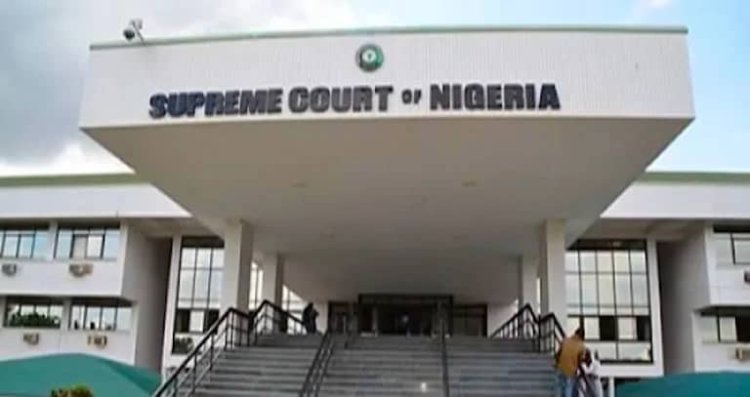
On July 11, 2024 the Supreme Court ruled in AGF v. AG Abia State & 35 Others, Suit SC/CV/343/2024 that Federal allocations meant for LGs must be paid directly into council accounts .States cannot keep or spend council funds , Running LGs with unelected caretaker committees is unconstitutional
But findings show there is still no clear evidence that allocations are going straight to councils, that State Joint Local Government Accounts have been scrapped, or that councils now control their finances.
Allocations to LGs jumped in the second year after the ruling.
July 2024 - June 2025: ₦4.496 trillion. Average monthly: ₦374.65 billion
July 2025 - June 2026: ₦5.984 trillion. Average monthly: ₦498.67 billion
That’s an increase of ₦1.488 trillion or 33.1% year-on-year.
Some monthly figures: Councils got ₦337.02bn in July 2024, ₦402.55bn in Dec 2024, ₦406.63bn in May 2025, and ₦419.97bn in June 2025.
In the second year, they received ₦444.85bn in July 2025, ₦529.95bn in Oct 2025, ₦537.88bn in Feb 2026, and ₦534.28bn in June 2026.
The problem traces back to Section 162 of the 1999 Constitution which created the State Joint Local Government Account. Under this system, LG funds pass through accounts controlled by state governments.
For years, council officials, NULGE, and civil society groups have accused governors of deducting from council money and leaving LGs broke. The Supreme Court ruling was meant to end that.
But according to NULGE National President, Aliyu Kankara nothing has changed.
“Up till now, they have not started the implementation of the financial autonomy. You know the allocation comes from the Federal Government, so they are the ones to commence the implementation.
“We have written several letters to them to remind them of the need to start paying local governments directly, but they haven’t done anything yet. States are still being paid the local government allocations.”
He said direct payment is the only way to strengthen grassroots administration.
After the judgment, President Bola Tinubu directed MDAs to implement it. An inter-ministerial committee was set up with officials from the SGF’s office, Ministry of Finance, OAGF, CBN, and Attorney-General’s office to work out direct payment procedures.
In total, ₦42.709 trillion was shared by the FG, states, LGs and oil-producing states as derivation in the 24 months.
FG: ₦14.620 trillion — 34.23%
States: ₦14.506 trillion — 33.96%
LGs: ₦10.480 trillion — 24.54%
Oil states/derivation: ₦3.103 trillion — 7.27%
All tiers got more in year two. FG’s share rose 47.34% to ₦8.709tn. States’ share rose 35.14% to ₦8.337tn. Derivation rose 6.19% to ₦1.598tn.
The delay is showing at the grassroots. In Oriire LGA, Oyo State residents are demanding police stations, better health centres, schools, roads and mobile network coverage after the recent abduction of schoolchildren and teachers. Many are asking why basic infrastructure is still poor despite years of FAAC money.
Analysts say rising allocations mean little if states continue to control how councils spend the funds.