Tinubu: Sahel Crises Fueling Insecurity in Nigeria, State Police and Forest Guards Key to Response
By Victor Idajil
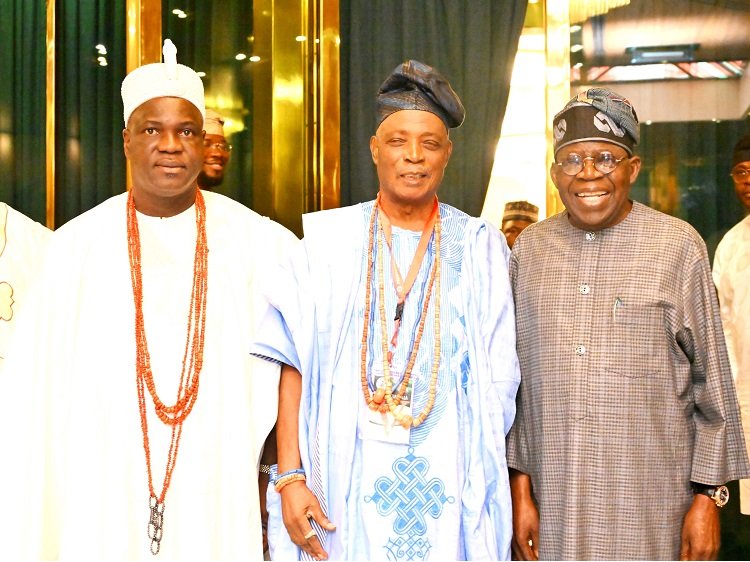
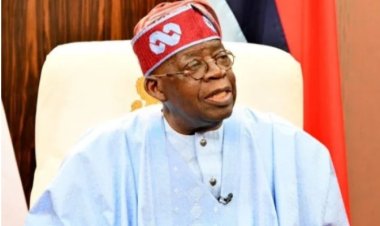
President Bola Ahmed Tinubu says Nigeria’s worsening security challenges are being compounded by instability in Mali, Burkina Faso and Niger Republic, and that the federal government is responding with state police, expanded forest guards and a bigger army.
The President spoke yesterday when he received members of the Oyo State Council of Obas and Chiefs, led by the Olubadan of Ibadanland, Oba Rashidi Adewolu Ladoja, at the State House in Abuja.
The royal delegation was at the Villa to thank Tinubu for the rescue of over 40 pupils and teachers abducted in Oriire Local Government Area after 56 days in captivity.
Tinubu said the turmoil across the Sahel is “adding more fuel to our challenges” as some non-Nigerian terrorists move across borders.
“Some of them that are non-Nigerians, you see the problem of insecurity in Mali, Burkina Faso, Niger Republic, is adding more fuel to our challenges,” he said.
“That is why we must enhance the capacity of the forest guards as well as create the state police.”
According to him, decades of debate over state policing will be resolved with institutional safeguards to prevent abuse by state governments or political actors. Traditional rulers, he added, will also have defined roles in the new policing structure.
The President said the security architecture is being overhauled. The Nigerian Army is being expanded from 8 to 12 divisions to cut response time against terrorists and bandits.
He also reiterated government’s no-ransom policy. In the Oyo kidnapping case, he said the criminals demanded money and the release of arrested gang members.
“We refuse to negotiate for ransom. These criminals wanted us to release from detention members of their criminal gangs that were already arrested. That was one of their conditions, outside of the money they’re looking for, and we said no deal. We are not going to negotiate with criminals,” Tinubu declared.
He described the rescue in Oriire as proof that security agencies are getting better at handling complex operations, and praised the armed forces for their performance.
Tinubu announced a major upgrade of the forest guard system.
“We are equally enhancing the capacity and capability of the forest guards. They are not just to chase antelopes and animals. We are going to have them chase the criminals and deal with them in various forests,” he said.
He urged Nigerians to support security efforts by being vigilant and reporting suspicious movements.
“The mention of intelligence is very important, and I want you to take it to our people to be extra vigilant, to know their neighbourhoods, know their areas, and report strange people,” he told the monarchs.
The President also challenged state governments to use their increased allocations — now “four to five times more” — for roads and projects that improve security and livelihoods, instead of “flyovers where there is no numeric traffic.”
“Nobody is borrowing money to pay salaries now. Pensioners are receiving their pay, and they should do more,” he said.
He promised regular consultations with traditional rulers nationwide, saying: “I will be calling meetings of so many of you traditional leaders to listen to you and offer some suggestions throughout the country. The immediate challenge is monumental. It’s not an easy job, but I asked for the job and I got it.”
“I can tell you the security challenge is getting better. We are getting a hang of it much better. Any time you come across some of our soldiers and police officers, please pat them on the back and say thank you. They are doing a good job,” he said.
Oba Ladoja hailed the President’s firm stance against ransom payments, saying it marks a turning point in the fight against kidnapping.
“The fact that you did not pay ransom, the fact that you stood your ground shows that we now have a government that knows what it is doing,” he said.
The Olubadan, however, asked government not to withdraw troops from the vast forest stretching from Oyo through Kwara to Niger, warning that criminals could regroup. He also praised ongoing federal projects in Oyo, including the reconstruction of the Ibadan-Ife Road with concrete pavement, which he described as a lasting solution to a decades-old problem.
The delegation included the Olugbon of Orile-Igbon, Oba Francis Alao; Aseyin of Iseyin, Oba Sefiu Olawale Oyebola; Balogun of Ibadanland, Oba Tajudeen Ajibola; Osi Olubadan, Oba Abiodun Kola-Daisi; and other monarchs from across the state.