FG:Fuel Subsidy Savings Used for Debt, New Minimum Wage, Student Loans and Social Programmes — Oyedele
By Victor Idajil
The Federal Government says savings from the removal of fuel subsidy and foreign exchange reforms have been channelled into debt servicing, implementation of the new minimum wage, student loans and expanded social intervention programmes.
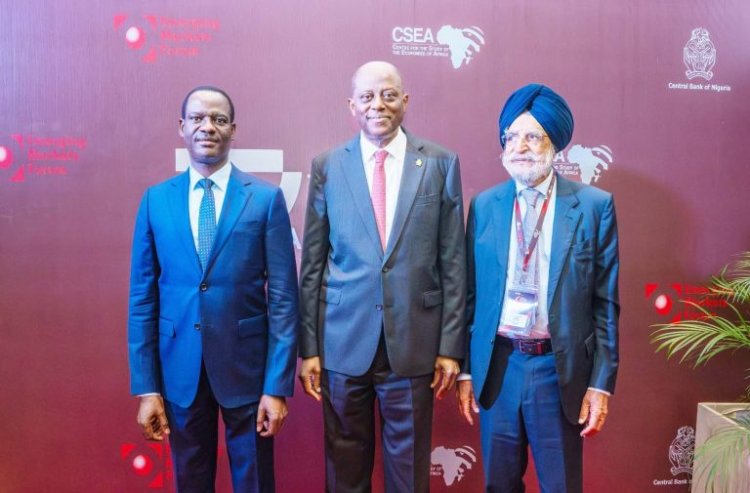
Minister of Finance and Coordinating Minister of the Economy, _Taiwo Oyedele_, disclosed this yesterday at the Seventh Africa Emerging Market Forum in Abuja while responding to questions on how the savings are being spent.
He admitted the question has come up repeatedly.
“I’ve heard this question so many times, and guess what? It’s a valid question,” Oyedele said.
According to him, petrol subsidy and what he called “subsidy on foreign exchange” previously cost about 5% of Nigeria’s GDP. The reforms, he said, were not just about saving money but about ending corruption, inefficiency and economic distortions.
Oyedele gave a breakdown of how the funds have been deployed. He said interest rates jumped after the reforms, forcing government to spend more on debt. “Instead of paying about eight per cent on our debts, we’re paying as high as 24 per cent. When you need to service debt, you don’t debate it. You pay, and you pay on time.”
He also noted that the increase of the minimum wage from N30,000 to N70,000 raised the government’s wage bill significantly.
Through the Nigerian Education Loan Fund, NELFUND, over 1.5 million students are now getting tuition support and monthly stipends. Oyedele said the programme has eased pressure on families, allowing parents to put money into businesses and other needs.
On social protection, he said cash transfers have been expanded to 15 million vulnerable households, with about 7.5 million Nigerians said to have been lifted out of extreme poverty. New programmes — NG-CARES, HOPE and SOLID — worth over $3 billion are also being rolled out to strengthen primary healthcare, basic education and support for vulnerable communities.
He added that the government will soon publish a full account of how the savings have been used for transparency.
“But in the meantime, I can give you some of the highlights,” he said.
Oyedele also addressed criticism that government is still borrowing despite improved revenue.
“If your budget is 10, your revenue target is six and you eventually collect seven, you have exceeded your revenue target, but you still need to borrow three,” he explained.
He said borrowing is justified when invested in projects that can generate returns higher than the cost of the loans.
He noted that before the reforms, part of government spending was funded by money “printed” by the Central Bank. With that stopped, alternative financing had to be found.
“Before the reforms, we were printing money to spend. If you stop printing, the spending doesn’t disappear. You need to finance the money you were printing before,” he said.
The minister defended the removal of fuel subsidy and FX liberalisation, calling them painful but necessary to correct years of structural distortions. He rejected claims that the reforms failed because poverty worsened initially, describing the hardship as a temporary effect of an economic reset.
Despite the early pains, Oyedele said Nigeria recorded nearly 10% real per capita income growth in dollar terms in 2025 and expressed optimism that poverty will decline as the reforms mature.
Going forward, he said government will measure success not just by GDP growth, but by reductions in multidimensional poverty, higher real income per person and lower inequality.
“We intend to make it prosperity for all Nigerians,” he said.
Oyedele said government is working on a framework to reduce borrowing costs for businesses without new subsidies, to boost investment and job creation. The Ministry of Finance and the Central Bank, he added, are aligning economic assumptions before major policy decisions.
He also revealed that studies show the cost of excessive regulation and bureaucratic bottlenecks is higher than revenue from Company Income Tax, Personal Income Tax and VAT combined. Removing those obstacles, he said, will do more for the economy than new tax incentives.
On jobs, he said the focus has shifted from just creating jobs to creating productive, well-paying ones, especially in agriculture and retail where most Nigerians work.
The minister urged local and foreign investors to take advantage of the reforms, saying government is simplifying regulations and reducing the cost of doing business.
“Now is not the time to wait for perfect conditions. The greatest opportunities of any generation emerge during periods of structural transformation, and we are living in one right now,” he said.
He added that the long-term goal is a $1 trillion economy by 2030, with growth that reflects in household welfare.
“A reform that shows up on national statistics but not on the household dining table hasn’t finished its job,” Oyedele said.