Tinubu Orders Recovered Loot, Unclaimed Dividends, Dormant Funds Put Into Student Loan Scheme
By Victor Idajili
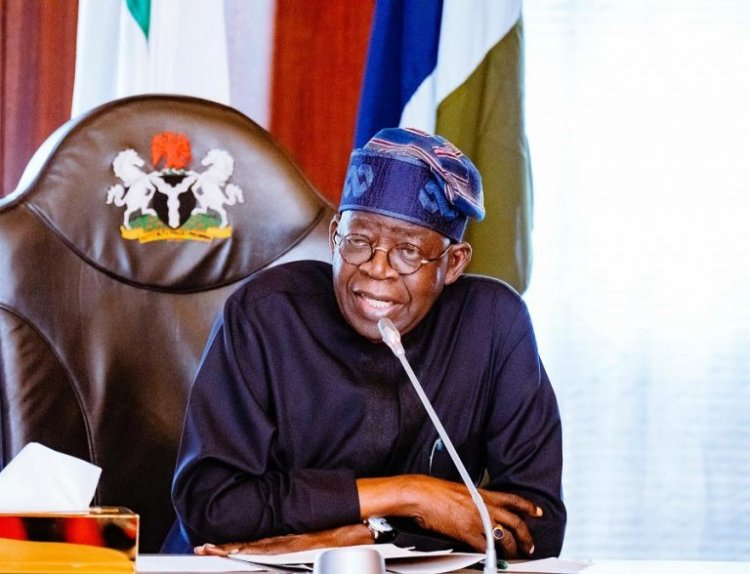
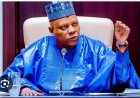
President Bola Tinubu has directed that money recovered by the EFCC, unclaimed dividends, and funds in dormant bank accounts be channeled into the Nigerian Education Loan Fund, NELFUND, to help finance tertiary education.
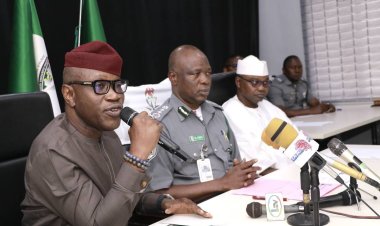
The directive was announced on Wednesday by the Minister of Education, Dr. Tunji Alausa, after the fourth Federal Executive Council meeting of the year at the State House, Abuja.
According to Alausa, the President wants only “cleared and unencumbered” funds. That means liquid cash already recovered by the EFCC and not tied to any ongoing court case. Seized properties, assets, or money still facing litigation will not be moved.
“The President was very clear: not seized properties, all recovered looted funds, liquid funds recovered by the EFCC will now be transferred to NELFUND,” Alausa told journalists.
He said the Attorney-General of the Federation, the Minister of Finance, the Ministry of Education, the Debt Management Office and other agencies have been tasked to work out the legal and operational framework for the transfer. The AGF will also work with the EFCC Chairman to identify funds that are legally free to move.
The same approach will apply to the Unclaimed Dividends Trust Fund and the Dormant Accounts Trust Fund. Government lawyers will review the laws governing both funds to see how the money can be legally accessed for NELFUND, but only funds without legal encumbrances will be affected.
“Every single fund that is still subject to a legal challenge will not be part of the money that will be transferred to NELFUND. The funds that will be transferred will be all cleared funds, unencumbered funds that were looted, funds that legally belonged to Nigeria, to Nigerians,” Alausa explained.
The minister said Tinubu sees education as one of the most productive uses for recovered public funds, especially as the administration pushes to build human capital for a $1 trillion economy. The goal is to put NELFUND on a sustainable footing as demand for student loans grows.
Alausa disclosed that more than 1.2 million Nigerian students are currently benefiting from NELFUND. So far, the Fund has paid out over N93 billion as upkeep allowances to students in federal and state institutions, and more than N250 billion as institutional fees to public tertiary institutions.
“The education of our children cannot wait; it is of utmost importance to him, and he will do anything and everything to protect the future of every single Nigerian child, every single Nigerian student,” the minister said.
He added that the loan scheme fulfills one of Tinubu’s campaign promises to expand access to tertiary education regardless of background.
On complaints about schools withholding refunds for students who paid fees before NELFUND sent its payment, Alausa said a framework is now in place requiring institutions to refund affected students within a set time. He said most early challenges with the scheme have been resolved, and any outstanding case reported to the ministry will be investigated.
Council also approved about N118.31 billion to complete the abandoned National Library of Nigeria headquarters in Abuja, plus N37 billion to furnish it. The project started on April 29, 2006 and was meant to be finished in two years, but work stopped in October 2008.
Alausa said Tinubu has directed that resources be mobilized to revive it, including funds from TETFund. He noted that the First Lady, Senator Oluremi Tinubu, asked that gifts for her birthday be directed to the library, raising about N25 billion.
FEC also approved the creation of the Nigerian Academy for the Gifted and Talented, to be formed by transforming the existing Suleja Academy. The minister said Suleja Academy was set up to nurture exceptionally gifted children but has operated like a regular Federal Government College. The new academy will be autonomous, with its own governance and funding from appropriation, endowments and gifts. The AGF has been asked to prepare an executive bill for the National Assembly to legalize it.
“We have to look for every single genius in this country and bring them in, nurture them, and let them help create the Nigeria of tomorrow,” Alausa said.
Finally, council approved an Entrepreneurship, Innovation and Business Incubation Certification programme for 14 federal universities to start this year. The technology-driven programme, already piloted at the University of Lagos, will teach students entrepreneurship, innovation, business incubation and digital skills with mentorship and certification.
The first set of schools includes ABU Zaria, BUK Kano, UNIZIK Awka, OAU Ile-Ife, University of Abuja, UNIBEN, UI, Unilorin, UNIJOS, UNILAG, UNIMAID, UNN Nsukka, UNIPORT and UDUS Sokoto. It will later be rolled out to other institutions.
Alausa said the decisions show the administration’s plan to put education at the center of economic transformation and ensure young Nigerians get both academic knowledge and practical skills.