Nigeria to tap €59m EU fund to fight illegal fishing, says Oyetola
By Victor Idajili
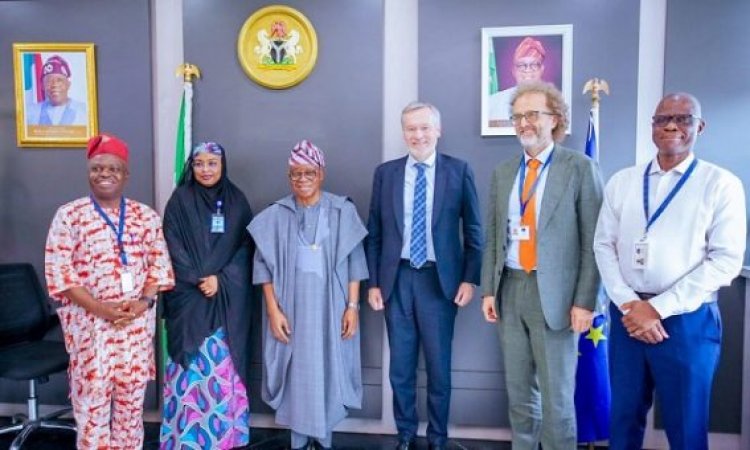
Nigeria is set to use a €59 million European Union initiative to step up its fight against illegal, unreported and unregulated fishing and improve how it manages marine resources.
Minister of Marine and Blue Economy, Adegboyega Oyetola, announced this during a meeting with EU Ambassador to Nigeria, Gautier Mignot, in Abuja. The talks focused on stronger cooperation in maritime security, ocean governance, and sustainable use of ocean resources.
Oyetola described illegal fishing as a serious threat to Nigeria’s marine ecosystem and to coastal communities that depend on fishing for food and income. He said the practice is depleting fish stocks, threatening food security, and weakening local economies.
“Illegal, unreported and unregulated fishing is a direct threat to national security, food sovereignty, and the survival of our coastal communities. We cannot afford to watch our marine ecosystems destroyed and livelihoods wiped out,” he said.
The minister stressed that beyond environmental damage, IUU fishing also affects national security and economic stability. He called for stronger international collaboration, better monitoring, and tougher enforcement to protect Nigeria’s territorial waters.
The €59m West Africa Sustainable Ocean Programme, WASOP, is funded by the EU. Oyetola said it offers Nigeria and other coastal states a chance to coordinate action against illegal fishing, improve ocean governance, and grow a sustainable blue economy.
He said Nigeria is ready to take full part in WASOP to access technical and financial support that will boost enforcement and advance the country’s blue economy agenda.
Oyetola also highlighted reforms under Nigeria’s National Policy on Marine and Blue Economy, which is driving innovation, attracting private investment, and promoting sustainable use of ocean resources. He noted progress in port operations, logistics and maritime security, with more work ongoing to expand maritime infrastructure and make Nigeria more competitive in global trade.
The minister urged development partners to go beyond anti-piracy support and help Nigeria tackle related crimes like environmental offences, human trafficking, and illegal fishing through a more integrated approach. He specifically asked the EU for more technical help with surveillance technology, fisheries monitoring, and enforcement systems across the Gulf of Guinea.
Ambassador Mignot restated the EU’s commitment to working with Nigeria on maritime safety and sustainable oceans. He said WASOP is designed to promote integrated ocean governance, better fisheries management, and protection of coastal ecosystems across West Africa.
According to Mignot, the programme will improve coordination among coastal countries, strengthen enforcement, and support a more inclusive blue economy for the region.
With fish stocks under pressure and coastal livelihoods at risk, Nigeria’s decision to leverage WASOP marks a push to turn policy into stronger action on the water.