Illicit financial flows costing Africa $88b yearly, says Edun
By Victor Idajili
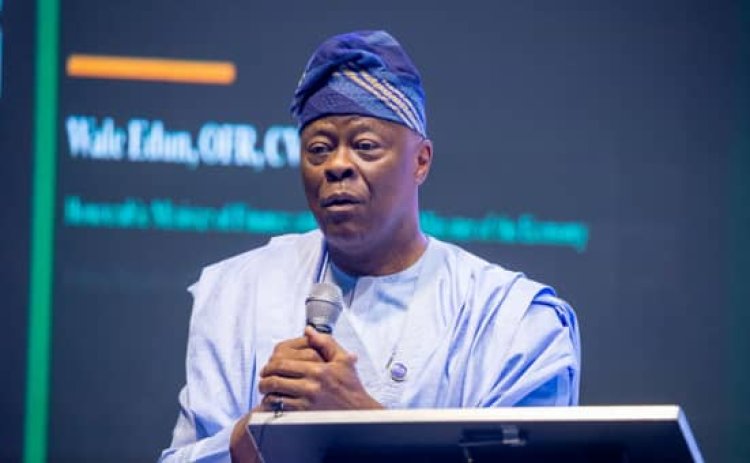
The Minister of Finance and Coordinating Minister of the Economy, Wale Edun, has warned that illicit financial flows are costing Africa about $88 billion every year, reducing funds needed for development across the continent.
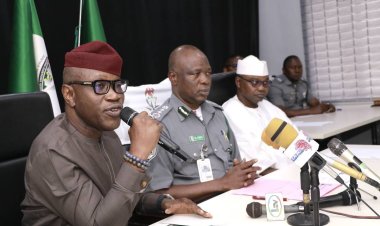
Edun spoke while delivering a keynote address at the 5th Session of the Sub-Committee on Tax and Illicit Financial Flows under the Specialised Technical Committee on Finance, Monetary Affairs, Economic Planning and Integration in Abuja, yesterday.
He said the scale of illegal financial outflows remains one of the biggest threats to Africa’s economic progress, noting that such funds could have been used to improve infrastructure, education, healthcare and other key sectors.
“Illicit financial flows alone are estimated to cost the continent nearly $88 billion annually—resources that should otherwise be invested in critical areas of our economies,” he said.
The minister added that Africa continues to face several economic challenges, including tax evasion, weak institutions, limited economic diversification and heavy reliance on external financing. “In addition, we continue to grapple with tax evasion and base erosion, limited diversification, weak institutional capacity and dependence on external funding,” Edun said.
He called for urgent fiscal reforms across the continent, stressing that African countries must focus on improving tax collection and blocking revenue leakages.
According to him, governments need to widen the tax base, strengthen public financial management and promote financial inclusion to mobilise local resources for development. “Broadening the tax base, improving compliance and reducing leakages are critical if we are to achieve sustainable growth,” he said.
Edun also urged African countries to develop strong capital markets and deepen efforts to tackle illicit financial flows through better enforcement and cooperation between countries.
He said reforms must be supported by strong institutions, improved digital systems, closer regional collaboration and active participation of citizens. “These foundations are necessary to ensure that reforms are not only implemented but sustained,” he added.
The minister said Africa already has a clear roadmap in the African Union’s development framework, Agenda 2063, which outlines steps to strengthen tax systems, improve governance and boost domestic revenue. “These are practical steps that can transform our economies if properly implemented,” he said.
Speaking on Nigeria’s efforts, Edun said the country has introduced major reforms since May 2023 under President Bola Tinubu.
He said the reforms are aimed at simplifying the tax system, expanding the tax base and reducing the burden on vulnerable citizens, adding that they came into effect in January 2026. “We have taken deliberate steps to improve compliance and make the system fairer for Nigerians,” he said.
The Minister noted that the government has also improved transparency in the management of oil and gas revenues, following the signing of Executive Order 9, which mandates that such revenues be paid into designated accounts before use.
Edun said the removal of fuel subsidies and the unification of the exchange rate have improved transparency, reduced distortions in the economy and boosted investor confidence.
He added that the launch of a National Single Window system will help improve trade processes and reduce leakages linked to illicit financial flows. “The goal is to enhance efficiency and ensure that revenues due to the country are not lost,” he said.
Edun stressed that the work of the sub-committee is important in shaping policies and partnerships that will help African countries protect their resources and strengthen their fiscal systems.
He said the outcome of the meeting would contribute to building a more self-reliant and economically stable Africa.
Earlier, the Executive Chairman of the Nigeria Revenue Service (NRS), Dr. Zacch Adedeji, said illicit financial flows remain a major challenge, draining resources needed for development. “Every year, billions of dollars meant for development are lost through illegal transfers, trade mispricing and tax evasion,” he said.