Illegal mining: Nigeria loses N13.7trn yearly as stakeholders demand crackdown
By Felix Uroko
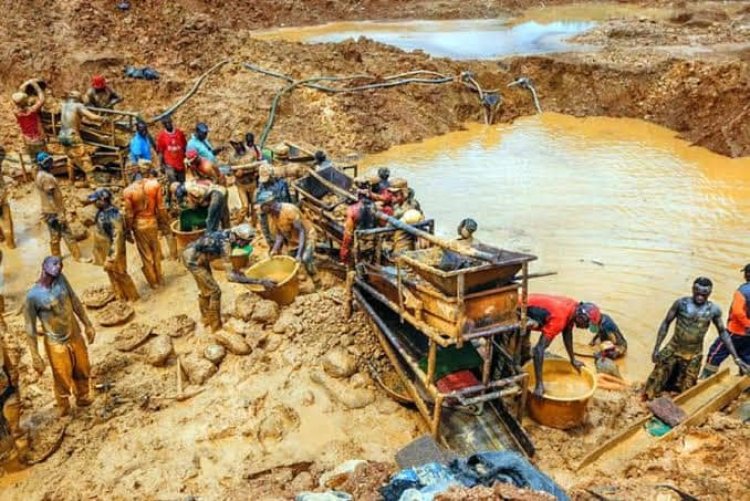
Nigeria is losing an estimated ₦13.7 trillion every year to illegal mining and the illicit trade in solid minerals, stakeholders in the sector have warned.
They are calling for tougher enforcement, better monitoring and stronger regulation to stop the continued diversion of the country’s mineral wealth outside the formal economy.
The stakeholders spoke amid concerns over the enforcement of the Minerals and Mining Act 2007, which requires lawful licences, leases or other regulatory approvals for mineral exploration and exploitation.
Despite the legal framework, illegal operations involving minerals such as gold, lithium, gemstones, tantalum and kaolin remain a major challenge.
Formalise artisanal miners — Faro
Foreign trade expert Idris Faro urged the government to distinguish between criminal mining networks and artisanal miners operating outside the formal regulatory system.
Rather than simply criminalising artisanal miners, he advocated licensing, retraining and equipping them with modern technology and access to credit.
“What we need to do is to grant them the legal rights to carry on mining and assist them with modern technology in addition to accessing credit facilities from financial institutions,” Faro said.
He, however, called for decisive action against criminal groups allegedly controlling mining sites and imposing levies on miners and communities.
Faro also urged authorities to investigate possible links between licensed mining operators and armed groups operating around mining locations.
He called for stronger monitoring of mineral transportation, including greater involvement by security agencies and the Nigeria Customs Service.
Trace financiers behind illegal mining — Nwadishi
Executive Director of the Centre for Transparency Advocacy (CTA), Faith Nwadishi, said the losses extend beyond government revenue, warning of environmental, health and economic consequences for mining communities.
She urged authorities to investigate the financiers and companies benefiting from illicit mining, rather than focusing only on workers found at mining sites.
«“We should be able to pay attention to what the sponsors and miners are doing, and do proper regulation and monitoring so we can get the benefits,” she said.»
Nwadishi said beneficial ownership information could help investigators identify individuals and companies financing illegal mining operations.
She also called for better traceability of minerals, environmental impact assessments, stronger Customs monitoring, community participation and the use of technology to track mineral movements.
Weak regulation driving revenue losses
Founder and Executive Director of Ziva Community Initiative (ZCI), Emily Offodile, said illegal operators were depriving governments of royalties and other revenue from the sector.
She questioned who pays royalties when minerals extracted by unregulated artisanal miners are sold through informal channels.
«“When those artisanal miners mine and sell to these people, who is now paying royalties? There’s no royalty that is being paid. So it all boils down to losses,” Offodile said.»
She called for a review of the regulatory framework and stronger coordination among agencies overseeing the mining industry.
Offodile said mining was a multisectoral activity and that regulatory weaknesses across the value chain were contributing to the loss of the country’s mineral wealth.
The stakeholders broadly agreed that formalising artisanal mining, tracing mineral supply chains, targeting financiers and strengthening enforcement would be critical to reducing illicit mining and increasing government revenue from Nigeria’s solid minerals sector.