Nigeria Holds Spot as World Bank’s 3rd-Largest Borrower with $18.5bn in IDA Loans
By Victor Idajili
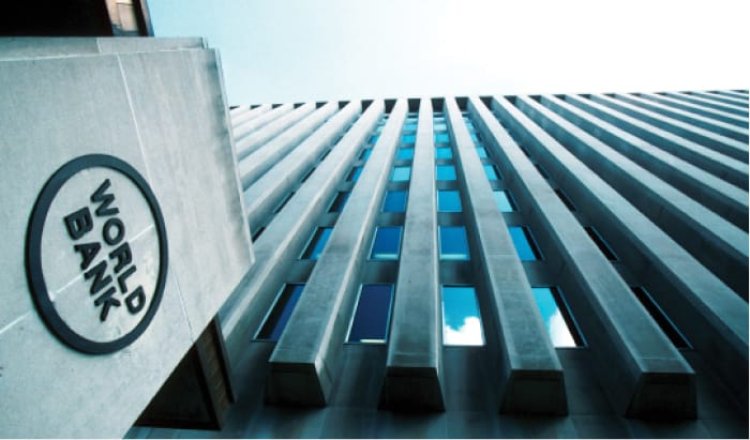
Nigeria remains the third-largest borrower from the World Bank’s International Development Association, IDA, even after a small drop in its debt exposure in the first quarter of 2026.
According to IDA’s March 2026 financial statements, Nigeria’s outstanding exposure stood at $18.5bn as of March 31, down slightly from $18.7bn at the end of December 2025. That $200m dip is a 1.1% decrease over three months.
On a year-on-year basis, however, Nigeria’s borrowing went up by $1.2bn, or 6.9%, from $17.3bn in March 2025. The trend shows the country is still leaning more on concessional financing to fund development projects and economic reforms.
Bangladesh leads the list with $22.7bn, followed by Pakistan at $19.2bn, with Nigeria third at $18.5bn. Other African countries in the top tier include Ethiopia at $14.4bn, Tanzania at $14.3bn, and Kenya at $13.2bn.
The IDA’s total loans outstanding stood at $230.8bn as of March 31, 2026, a slight dip from $231.1bn in December 2025. Loans classified as non-accrual made up just 0.4% of the portfolio, while provisions for potential losses were $6.3bn, about 2% of total exposure.
Nigeria’s $18.5bn accounts for roughly 8% of IDA’s entire loan book and 13.3% of what the top 10 borrowing countries owe. In fact, the 10 largest borrowers make up about 60% of IDA’s total exposure, showing how concessional lending is concentrated among a handful of developing economies.
Across the board, borrowing is still rising. Ethiopia’s exposure climbed from $13.2bn to $14.4bn between March 2025 and March 2026, Tanzania’s from $12.6bn to $14.3bn, Bangladesh’s from $21.2bn to $22.7bn, Pakistan’s from $18.3bn to $19.2bn, and Ghana’s from $7.1bn to $7.4bn.
Nigeria’s place among the top borrowers reflects the scale of its needs in infrastructure, social investment, and reform programs under the World Bank’s low-interest lending window.