Fresh US Strikes on Iran Push Up Cooking Gas and Petrol Prices in Nigeria
By Victor Idajili
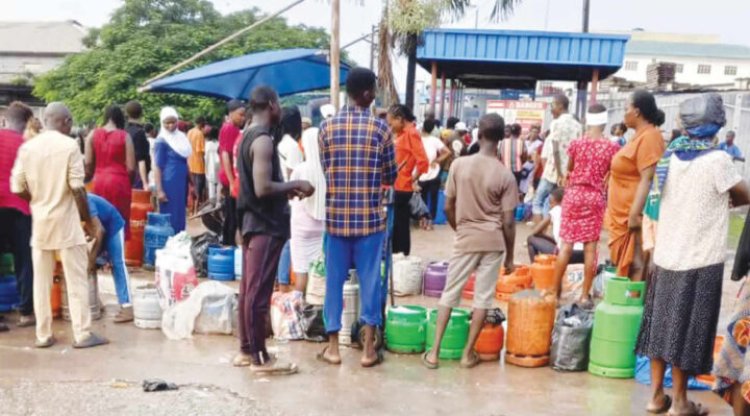
Nigerians are feeling the heat again as cooking gas and petrol prices climb, after new US strikes on Iran sent global oil prices higher and raised fears of more disruption to energy supplies.
The latest flare-up in the Middle East hit just as households and businesses were already dealing with inflation, a weak naira, and rising transport costs.
Brent crude jumped 3.75% to nearly $98 a barrel, while US crude rose about 4% after American forces targeted Iranian military sites in Bandar Abbas. The US also said it intercepted four Iranian drones near the Strait of Hormuz — the shipping route for roughly a fifth of the world’s oil and LNG.
Despite ongoing ceasefire talks between Washington and Tehran, the tension is already showing up at Nigerian fuel stations and gas depots. Marketers warn prices could stay high if the standoff drags on.
In Lagos, Ogun, and other states, cooking gas now sells for ₦1,750–₦2,000 per kilogram. Earlier this year, it was under ₦1,000 in some areas.
Petrol is going for ₦1,310–₦1,400 per litre at many stations, pushing up transport fares and costs for small businesses.
At several gas retail outlets in Lagos and Ogun, people were seen leaving with empty cylinders after finding out they couldn’t afford to refill.
The spike is hitting low-income households hardest. Many switched to LPG in recent years after government campaigns pushed cleaner cooking over firewood and kerosene.
Even though Nigeria is Africa’s biggest crude producer, it still imports most of its refined fuel and some LPG. That means global price swings, shipping costs, and forex rates hit local prices almost immediately.
“The conflict in the Middle East has pushed up the cost of energy around the world,” said Felix Ekundayo, Managing Director of Gas Terminally.
The Strait of Hormuz is the main worry. Since US and Israeli strikes on Iran on February 28, Tehran has threatened shipping in the waterway. That’s driving up insurance premiums, freight costs, and supply risks for oil and LNG cargoes headed to markets including Africa.
Economists say if global oil prices stay high, Nigeria’s fragile recovery could take another hit through higher inflation, logistics costs, and weaker purchasing power.
Higher crude prices could lift government revenue in the short term, but most Nigerians won’t feel it right away. Refinery limits, forex instability, and deregulated fuel pricing mean the cost gets passed on at the pump.
Nigeria is producing more LPG at home. In 2025, total supply hit about 1.6 million metric tonnes. Around 86–87% came from domestic sources — mainly NLNG, Dangote Refinery, and gas processing plants like Kwale, Ovade, and Greenville. Imports now make up just 13–14%.
NLNG alone supplies over 500,000 metric tonnes a year to the local market, covering about 30% of demand.
For now, with no clear end to the US-Iran tensions, both traders and consumers are bracing for more volatility in oil and gas prices.