FG Pledges 80% Electricity Access in 5 Years, Targets Grid Losses Below 17%
By Victor Idajil
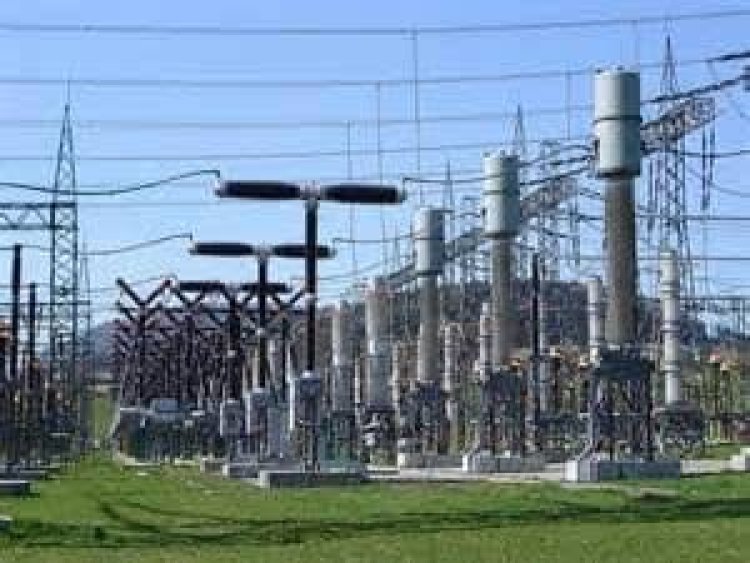
The Federal Government says it wants to push electricity access in Nigeria above 80% within the next five years, and close the gap between installed and actual power generation in three years.
Minister of Power, Joseph Tegbe, announced this at the just-concluded Nigeria Economic Summit Group event in Lagos. He spoke on “Industrialisation and Regional Competitiveness: The Role of Power.” His presentation was delivered by his Special Adviser, Martins Olajide.
Tegbe said the plan is part of efforts to fix the energy crisis hurting Nigeria’s manufacturing sector. He also backed NERC’s target to cut Aggregate Technical, Commercial and Collection losses to below 16.92% within three years.
“Over 80% access, ATC&C losses below 17%, the capacity gap closed – Nigerian industry gets the reliable, affordable power it needs to compete for AfCFTA’s 1.4 billion consumers,” he said.
He linked the plan to President Bola Tinubu’s goal of building a $1 trillion economy. “Electricity sits at the heart of that ambition,” Tegbe stated.
The ministry said work has started on key transmission lines: Lagos corridor, Enugu–Port Harcourt, and Abuja–Kaduna–Kano. Other steps include rolling out 7 million meters and training 5,000 technicians. The government also plans to set up captive power clusters that link electricity directly to industrial hubs.
Tegbe added that the FG will push for an independent electricity market with less government interference, better liquidity, and fewer debts.
Officials said Nigeria’s power deficit remains a major barrier to industrial growth. The country has 13,625MW of installed grid capacity, but average daily supply is only 4,854MW. That means about 62% of installed capacity sits idle. Peak demand is estimated at 20,000MW.
For over 200 million people, average supply is just 4,500 to 5,000MW. The grid collapsed 26 times in 2024. Energy alone accounts for 30% to 40% of factory costs.
The ministry noted that Nigerians spent N16.5 trillion on generators and other self-generation in 2023, compared to about N1 trillion paid for grid electricity. The World Bank estimates unreliable power costs Nigeria $25 billion yearly, about 5% to 7% of GDP.
At the same event, Dr Oluwasegun Osidipe, Director of Research and Economic Policy at MAN, said poor power supply is still the number one problem for manufacturers.
“In the Q2 2026 Manufacturers’ CEO Confidence Index, inadequate energy supply was the top constraint,” he said.
Osidipe said many factories now run their own power plants. MAN data showed manufacturers spent about N1.35 trillion on alternative energy in 2023, on top of grid bills. “How do you expect such a manufacturing concern to be competitive?” he asked.
He also flagged “regulatory tyranny” as a problem, with too many agencies and overlapping rules wasting management time. Other issues include exchange rate volatility, dependence on imported equipment and raw materials, and poor coordination between monetary and fiscal policies.
“You might agree with me that the manufacturing sector cannot be competitive in an environment where the government is using its right hand to counter what the left hand is extending to the industry,” Osidipe said.