FG Borrowed N12.62tn in 2024, Overshooting Target by N4.79tn as Revenue Fell Short
By Victor Idajili
The Federal Government borrowed far more than planned in 2024 after weaker revenue pushed the budget deficit wider, new data from the Budget Office of the Federation shows.
According to the Fourth Quarter and Consolidated Budget Implementation Report for 2024, total new borrowings rose to N12.62 trillion, exceeding the approved target of N7.83 trillion by N4.79 trillion, or 61.2%.
The overshoot was driven largely by a revenue shortfall. The fiscal deficit for the year stood at N13.51 trillion, well above the N9.18 trillion projected in the budget and also higher than the N10.55 trillion deficit recorded in 2023.
Aggregate Federal Government revenue came in at N20.98 trillion against a target of N25.88 trillion, leaving a shortfall of N4.90 trillion.
Total expenditure was N34.49 trillion, just N561.29 billion below the approved N35.06 trillion. The Budget Office said this shows the bigger deficit was caused mainly by lower income, not higher spending.
“Total Revenue Inflow of the Federal Government stood at N20.98tn at the end of December 2024. This represents an N8.50tn, 68.11% increase when compared to N12.48tn that was reported at the end of 2023, but N4.89tn, 18.92% lower than the 2024 annual budget estimate,” the report stated.
Oil revenue was the biggest drag. Gross oil revenue was N15.07 trillion, N4.93 trillion below the N19.99 trillion estimate. The report blamed this on crude oil prices averaging $74.65 per barrel in Q4, below the $77.96 benchmark, and daily production of 1.54 million barrels, below the 1.78 million bpd assumption.
Non-oil revenue, however, did better than expected. It reached N16.09 trillion, N5.29 trillion, or 48.91%, above the N10.81 trillion target, supported by stronger collections from Company Income Tax, VAT, Electronic Money Transfer Levy and Customs.
To cover the gap, the government relied heavily on borrowing:
Domestic borrowing N6.06 trillion, exactly on target .Foreign borrowing N3.37 trillion, N1.60 trillion above the N1.77 trillion budgeted. Budget support N3.19 trillion, though no provision was made for it in the 2024 budget. The source was not disclosed
Multilateral and bilateral project-tied loans added another N1.98 trillion, compared with a N1.05 trillion estimate. Expected privatisation proceeds of N298.49 billion did not materialise.
In total, new borrowings financed about 36% of the 2024 budget.
Debt servicing also jumped. Total debt expenditure hit N12.36 trillion, 52.71% above the N8.27 trillion budgeted.
Capital spending lagged. N5.81 trillion was released and cash-backed to MDAs for 2024 capital projects, but only N3.27 trillion or 81.91%, had been utilised as of June 30, 2025.
The report showed total public debt rose to N144.67 trillionas of December 2024, pushing the debt-to-GDP ratio to 61.22%. That is above Nigeria’s self-imposed ceiling of 40% and the international benchmark of 56% for similar economies.
Speaking on the development, Aliyu Ilias, CEO of CSA Advisory, said the sharp rise in borrowing raises macroeconomic risks.
“The fact is that it has negative and positive impacts. But the negative impact is that we already have issues of debt service. You look at our budget, about N15tn is needed to service debt, and now we’re incurring more,” he said.
He added that excess liquidity from borrowing could fuel inflation and raise the cost of living if not well managed, and urged government to focus more on boosting oil output and trade instead of relying on debt.
Dr. Olusegun Omisakin, Chief Economist at the Nigerian Economic Summit Group, said borrowing itself is not the problem.
“The challenge is what we use the money for. If Nigeria borrows and you see the impact on infrastructure, nobody will really be concerned about the rate of borrowing.”
Muda Yusuf, CEO of the Centre for the Promotion of Private Enterprise, said Nigeria must urgently rein in debt growth.
“We need to work on the growth of our debt. We need to devise strategies to ensure that our debt levels are sustainable.”
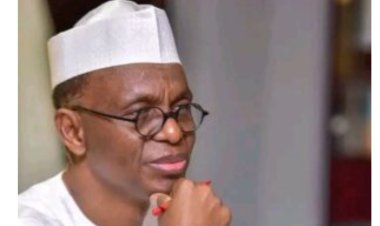
The issue has also drawn public debate. The Emir of Kano, Muhammadu Sanusi II, recently questioned continued borrowing despite subsidy removal, asking: “If you’re not paying the subsidy and you’ve got the money, why are we still borrowing?”
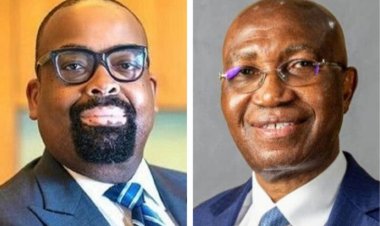
The Presidency, through Special Adviser on Policy Communication, Daniel Bwala, defended the loans, saying they were targeted at critical infrastructure.
The Minister of Finance and Coordinating Minister of the Economy, Wale Edun, also argued that debt should be judged by purpose and returns, not just size. “A nation, a state, or a business that borrows to finance a productive asset generating returns above the cost of that capital is not behaving recklessly; it is behaving rationally,” he said.
He had earlier warned, however, that “Nigeria cannot continue to finance development primarily through borrowing. We must build a fiscal system capable of sustainably supporting critical infrastructure, quality education, affordable healthcare, security, and social protection.”
The Budget Office said ongoing reforms to strengthen tax administration, improve non-oil revenue, plug leakages and boost remittances from government-owned enterprises should help reduce reliance on borrowing and improve fiscal sustainability in the medium term.