870 Killed in Election Violence in 11 Years Despite Peace Accords
By Victor Idajili
Nigeria’s problem of election violence has continued despite repeated peace agreements signed by political parties, with at least 870 people reportedly killed in election-related incidents since the National Peace Committee began its work in 2015.
The figure has raised fresh doubts about how effective the accords have been, especially as parties and presidential hopefuls begin preparations for the 2027 general elections.
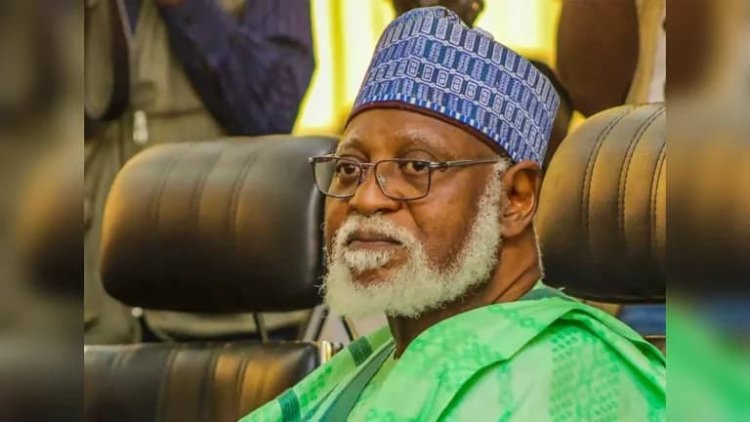
Launched ahead of the 2015 polls, the National Peace Committee is chaired by former Head of State, Gen. Abdulsalami Abubakar, and co-chaired by Catholic Bishop of Sokoto, Matthew Kukah. Its goal was to get candidates to commit to peaceful campaigns and to accept election results.
Ahead of the 2015 election, then APC candidate Muhammadu Buhari and PDP candidate Goodluck Jonathan signed the first accord in Abuja, pledging to avoid actions that could undermine democracy. Violence still occurred.
A 2016 report by the Council on Foreign Relations put deaths during the 2015 elections at 106.
The 2019 elections were deadlier. The Nigeria Civil Society Situation Room estimated 626 people were killed in the six months between the start of campaigning and the elections.
For the 2023 general elections, the Centre for Democracy and Development recorded about 109 deaths, even though presidential, governorship and National Assembly candidates all signed peace agreements.
Violence also marred the recent Osun State governorship election won by Governor Ademola Adeleke, with at least 29 deaths reported.
Two weeks ago, the National Peace Committee convened another signing ceremony in Abuja. President Bola Tinubu was represented by Secretary to the Government of the Federation, George Akume.
Other attendees included Nigeria Democratic Congress candidate Peter Obi, SDP candidate Adewole Adebayo, AAC’s Omoyele Sowore, and former Cross River governor Donald Duke of the PRP.
Former Vice President Atiku Abubakar, ADC presidential candidate, was absent. Explaining the decision, ADC National Publicity Secretary Bolaji Abdullahi said the committee must move beyond ceremonial signings and ensure there are consequences for breaches.
“We recognise the importance of what they are doing, but we say they need to do more,” he said.
Civil society groups and international observers have echoed that concern, saying past accords lacked enforcement.
Amnesty International’s Country Director, Isa Sanusi, said the idea behind the accord is good but it has not stopped violence.
“The peace accord is on the surface good, but in reality, it never prevents or discourages anything. There must be sanctions, and there must be a mechanism for monitoring and documenting breaches,” he said.
He warned that “politicians who incite hatred or cause violence must be held to account,” noting that hateful rhetoric has already started.
The SDP also said signing without penalties changes nothing. Its National Publicity Secretary, Rufus Aiyenigba, described the exercise as a “seasonal political ritual good only for its symbolism” and called for “strong punitive measures against electoral offenders.”
Security analyst Kabir Adamu disagreed that the accords are useless just because violence continues. He argued the real question is whether the agreement provides a framework for monitoring and response.
“The issue was never whether a signed accord, by itself, stops violence, as it doesn’t. The real question is what happens to political conduct in the absence of one,” Adamu said.
He noted criticisms from Sowore, Adebayo and Obi as fair, but said the 2026 version of the accord has new features. According to him, in March 2026 the National Peace Committee and the Kukah Centre linked the accord directly to the Constitution and Electoral Act, giving defined legal consequences for violations including fake news and incitement by candidates, spokespersons and supporters.
He also pointed to the involvement of the Nigeria Police Force and INEC, and to the Kukah Centre’s Election Security Information Hub. The ESI Hub, he said, has logged over 2,500 security incidents and more than 380 electoral offences since mid-2025, mapped to hotspots, with data intended to feed public compliance scorecards and early-warning responses.
“For me, this is the real shift,” Adamu said. “Verification and consequences have been built into the accord’s architecture, making it not just a signing ceremony.”
Nigeria’s electoral history is filled with intimidation, hate speech, attacks on opponents and destruction of campaign materials. The latest accord will now be tested on whether institutions act when commitments are broken.
With 2027 approaching, the measure of success will be whether the new monitoring and sanction mechanisms deter violations, identify those responsible, and ensure accountability.
For now, the question remains whether this peace accord will be another symbolic gesture or the turning point Nigeria needs to reduce election violence.