Xenophobia in South Africa: Nigerian Embassy Overrun as 269 More Citizens Evacuated
By Victor Idajili
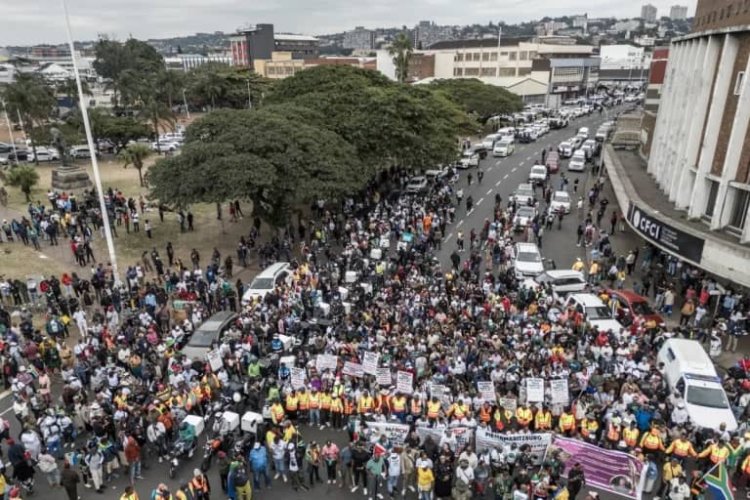
The Federal Government says Nigerians still in South Africa remain safe, even as fresh xenophobic tensions and large anti-immigrant protests force more citizens to flee and return home.
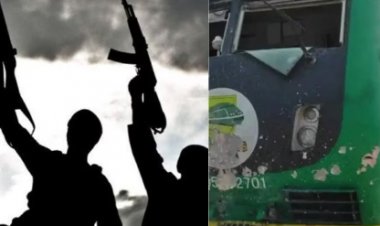
A second government-backed evacuation flight landed at Lagos’ Murtala Muhammed International Airport on Tuesday at 10:48 a.m., bringing 269 Nigerians from Johannesburg on an Air Peace aircraft. That follows 66 Nigerians who returned on June 24 via a flight facilitated by a private Nigerian. The Nigerian Embassy in Pretoria has also been overrun with citizens seeking refuge as protests escalated.
Tensions spiked after a Nigerian businessman known as ‘Big Joe’ was reportedly shot dead outside his shop in Witbank, Mpumalanga, on Sunday. Police have not confirmed the motive.
On Tuesday, thousands of South Africans marched in major cities under the “March and March” campaign, which had set the day as a deadline for undocumented migrants to leave. Police and private security were deployed nationwide. Authorities described most demonstrations as peaceful, but reported isolated cases of looting, vandalism, assaults, brick-throwing in Yeoville, and forced evictions in Germiston. Five people were arrested in Soweto for looting a foreign-owned shop.
The military was deployed to Hillbrow in Johannesburg after a teenager was reportedly shot and a vehicle set ablaze.
Leaders of the “March and March” group say they will hold weekly protests for six months to push for deportations. Operation Dudula members say they will keep urging police to arrest undocumented foreigners.
President Cyril Ramaphosa met some protest leaders on Monday, urging calm. “Some foreign nationals who live in South Africa are here lawfully. They work, study, raise families, invest in our economy and contribute positively to our society. They too are entitled to the protection of our laws and our Constitution,” he said in his weekly newsletter.
South African police say about 50,000 undocumented migrants have been arrested since January and roughly 25,000 repatriated, mostly other African countries.
The Ministry of Foreign Affairs said the June 30 deadline set by protest groups prompted accelerated evacuations. The latest 269 returnees were received in Lagos by Ambassador Haruna Ali-Gombe, Director of African Affairs, who delivered President Bola Tinubu’s reassurance.
“The evacuation process is still on course and more flights are expected in the next few days to evacuate all Nigerians that have been screened and cleared to voluntarily return,” the ministry stated.
Acting High Commissioner to South Africa, Temitope Ajayi, said many Nigerians sleeping outside the embassy or in churches were not on the official list. “Our agreement was that it is only when the flight is coming that we call the people who are captured on the list… Some of these people defied the mission’s notification and followed the community’s notification,” he explained.
About 150 people remain at the embassy, with another 700 still awaiting evacuation. The mission, working with the Nigerian Union South Africa, is providing food, shelter, and humanitarian aid. A pastor also opened a church for 79 men, while over 80 women and children are at the High Commission.
Ajayi confirmed the mission is investigating the reported killing of a Nigerian on Sunday and is still pursuing justice in two earlier cases: the April death of Amaramiro Emmanuel after alleged assault by soldiers in Port Elizabeth, and the April 26 death in custody of Ekpenyong Andrew in Pretoria. Nigeria has lodged protest notes and is awaiting investigation results.
Nigerian Union South Africa President, Barr. Smart Nwobi, said citizens were advised to stay indoors while the union monitors events. “The South African President has assured that they have deployed enough resources for security agencies to ensure that no life or property is lost,” he said.
Nwobi said more than 600 Nigerians are cleared for repatriation, with flights expected this week. He praised Imo State Governor Hope Uzodimma for giving N1 million to returnees from the state and urged other governors and the FG to review Nigeria-South Africa relations. “Our government should review the agreement and relationship it has with South Africa in view of the ongoing xenophobia,” he said.
The Association of Yorubas in Diaspora said Tuesday’s march ended without attacks on Nigerians.
NICASA Deputy Chairman, Western Cape, Leo Azebeokhai, urged Abuja to push South Africa on permit renewals. Many Nigerians, he said, become undocumented because passport renewal requires expensive travel to Johannesburg, and Home Affairs delays leave permits expired.
He also said delays in promised evacuation flights have left nearly 600 people stranded after many sold or abandoned their homes. “The government promised five airlines. So far, only two have moved,” he noted.
Retired ambassadors Ogbole Amedu-Ode and Mohammed Mabdul called for intensified airlifts, continuous diplomatic engagement, regular summoning of South Africa’s envoy, an inter-ministerial committee for returnees, and AU-level action. Mabdul also suggested public sensitization against non-essential travel to South Africa and economic measures against South African firms in Nigeria.
The National Association of University Students condemned the attacks and gave South Africa a one-week ultimatum to act, threatening nationwide protests, action against South African businesses in Nigeria, and moving its headquarters to the South African High Commission in Abuja.
With anti-migrant protests expected to continue and more evacuation flights planned, Nigeria says it will keep engaging Pretoria at the highest level to protect its citizens.