Petrol imports crash by N2tn to N87bn
By Victor Idajili
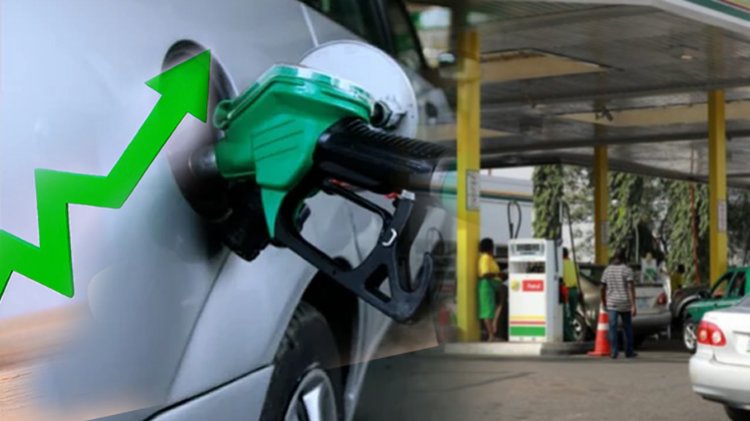
Nigeria’s spending on imported Premium Motor Spirit, commonly called petrol, plunged by over 96% in the first quarter of 2026, reflecting a major shift in the country’s fuel supply as local refining capacity ramps up.
Latest foreign trade figures from the National Bureau of Statistics show that only N87.401 billion was spent on importing Motor Spirit Ordinary between January and March 2026. That’s a drop of N2.184 trillion, or 96.15%, compared to N2.271 trillion spent on petrol imports in Q1 2025.
The decline is significant because petrol, which for years ranked among Nigeria’s top imported commodities, did not appear at all among the 19 most traded products with the rest of the world, Africa, or West Africa during the review period.
NBS reported that total imports stood at N13.619 trillion in Q1 2026, down 18.17% from N16.644 trillion in Q1 2025 and 21.05% lower than N17.251 trillion in Q4 2025.
China remained Nigeria’s top import source, followed by the US, India, Germany and the UAE. The most imported goods were crude petroleum oils, gas oil, durum wheat, data transmission machines and used vehicles.
Other oil products imported in Q1 2026 were valued at N748.10 billion, an 85.05% drop from N5.005 trillion in Q1 2025 and an 81.38% drop from N4.018 trillion in Q4 2025.
The N87.401 billion spent in Q1 2026 is the lowest quarterly petrol import bill since at least 2022. Records show Nigeria spent N2.694 trillion on petrol imports in Q1 2022. That fell 24.5% to N2.033 trillion in Q1 2023, then surged 87.6% to N3.813 trillion in Q1 2024. It dropped 40.4% to N2.271 trillion in Q1 2025 before collapsing to N87.401 billion this year.
In simple terms, for every N100 spent on petrol imports in Q1 2025, only about N4 was spent in the same period of 2026.
Total trade value for petrol stood at N7.705 trillion in 2022, dipped slightly to N7.511 trillion in 2023, more than doubled to N15.418 trillion in 2024, then fell 32.7% to N10.373 trillion in 2025.
The sharp reduction mirrors growing contributions from domestic refineries, cutting Nigeria’s reliance on foreign suppliers and helping conserve foreign exchange.
For decades, Nigeria imported most of its petrol despite being Africa’s largest crude oil producer, because state-owned refineries operated far below capacity. That pattern began changing with investments in local refining and higher output from domestic plants.
The trend accelerated after the 650,000 barrels-per-day Dangote Petroleum Refinery in Lekki started supplying petrol in 2024.
NMDPRA data shows Dangote supplied an average of 40.1 million litres daily in January, accounting for 61.78% of national supply, while imports provided 24.8 million litres. By February, the refinery supplied about 36.5 million litres per day and imports collapsed to roughly 3.1 million litres, giving locally refined fuel over 92% of supply.
In March, Dangote remained the sole domestic supplier at 34.2 million litres daily, with imports at 5.9 million litres. April saw supply rebound: Dangote delivered 40.7 million litres per day while imports fell further to 3.7 million litres, putting the refinery’s share at about 92% of local consumption.
Petrol’s exit from the top import list strengthens the case that local refining is altering Nigeria’s trade patterns, lowering import dependence and reshaping foreign exchange demand.
Sustained cuts in fuel imports could improve Nigeria’s trade balance, reduce pressure on the naira and keep more value within the domestic economy, provided local production continues meeting demand.
The Q1 2026 data therefore marks one of the clearest signs yet of a structural shift in Nigeria’s downstream petroleum sector, with petrol imports falling to levels not seen in more than four years.