Nigeria Spent N12.63tn on Debt Servicing in 9 Months as Rising Debt Threatens Growth — Budget Office
By Victor Idajili
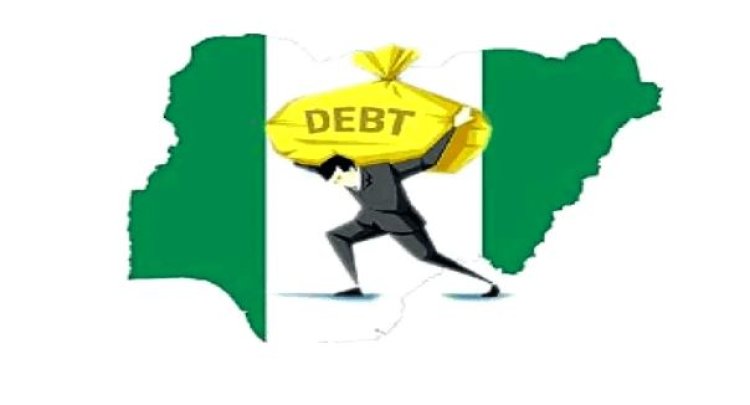
Nigeria’s fiscal stability is facing mounting pressure as the Budget Office of the Federation warned that the country is spending a large share of its revenue on debt servicing, leaving limited resources for infrastructure, social services and economic development.
The warning was contained in a fiscal assessment signed by the Director General of the Budget Office, Tanimu Yakubu, and published earlier this month in the third quarter 2025 budget performance report.
According to the report, Nigeria’s “debt service-to-revenue ratio remains elevated” while “fiscal space is constrained, requiring urgent revenue mobilisation and expenditure rationalization.”
The office said continued volatility in oil revenue was weakening government finances, with production challenges and declining international crude oil prices affecting expected earnings.
“Oil revenue volatility continues to expose fiscal outcomes to production and pricing shocks; structural underperformance persists amid lower market prices,” the report stated.
Despite the challenges in oil revenue, the Budget Office noted improvements in non-oil revenue growth, attributing the gains to reforms introduced by the government. It said stronger compliance measures, improved customs administration and stricter remittance enforcement by government agencies contributed to the increase.
“Non-oil revenue growth validates recent administrative reforms — particularly in compliance enforcement, customs automation, and independent revenue remittance,” the report added.
However, the office warned that rising debt obligations were placing heavy strain on public finances and limiting the government’s ability to fund key developmental projects.
The report also identified weaknesses in public cash management processes, noting that delays in fund releases and planning were slowing project implementation across ministries and agencies.
“Cash management bottlenecks — including bottom-up cash planning delays — continue to slow project execution and raise project cost risks,” it stated.
To improve fiscal sustainability and strengthen economic resilience, the Budget Office recommended adopting more realistic oil production assumptions and conservative oil price benchmarks to protect public finances from global market shocks.
It also called for aggressive revenue expansion through deeper tax compliance enforcement, accelerated e-Customs implementation and improved remittance of revenues by independent agencies.
On expenditure management, the office advised the government to “institutionalise value-for-money audits” and prioritise spending on projects capable of delivering measurable economic benefits.
The report further stressed the need to reduce the debt service burden through increased revenue generation and concessional financing strategies.
“Debt Management: Target reduction in debt service-to-revenue ratio to sustainable thresholds in 2025 through revenue growth and concessional financing strategies,” the document stated.
The Budget Office warned that global economic uncertainties, including commodity price volatility, climate-related shocks and monetary tightening in advanced economies, would continue to test Nigeria’s fiscal resilience.
It added that the office would maintain “rigorous monitoring, inter-agency data integration, and transparent public reporting.”
Earlier, it was reported that Nigeria spent about N12.63 trillion on debt servicing between January and September 2025, more than four times the N3.1 trillion released for capital and infrastructural development during the same period.
Figures from the Office of the Accountant-General of the Federation and the Budget Office showed that total debt service expenditure reached N12.63 trillion by the end of the third quarter of 2025, while total capital expenditure stood at N3.10 trillion.
The report indicated that domestic debt servicing accounted for the largest share, with the Federal Government spending about N6.22 trillion on domestic debt obligations during the nine-month period. Foreign debt servicing amounted to about N6.29 trillion, while sinking fund payments stood at N108.17 billion.
In contrast, capital expenditure performance remained far below projections. Out of the N23.44 trillion budgeted for capital projects in the 2025 fiscal year, only N3.10 trillion had been released by the end of September, representing about 13 percent performance.
The breakdown showed that capital expenditure by Ministries, Departments and Agencies and other government entities stood at N1.208 trillion, while grants and donor-funded projects accounted for N1.08 trillion.
Capital expenditure for government-owned enterprises stood at N615.6 billion, while capital supplementation totalled N200 billion between January and September 2025.