NEPZA Urges EU Nations to Invest in Nigeria’s Special Economic Zones
The Nigeria Export Processing Zones Authority (NEPZA) has called on European Union (EU) member states to deepen economic ties with Nigeria by investing in the country’s Special Economic Zones (SEZs) to drive trade expansion, industrialisation and mutual prosperity.
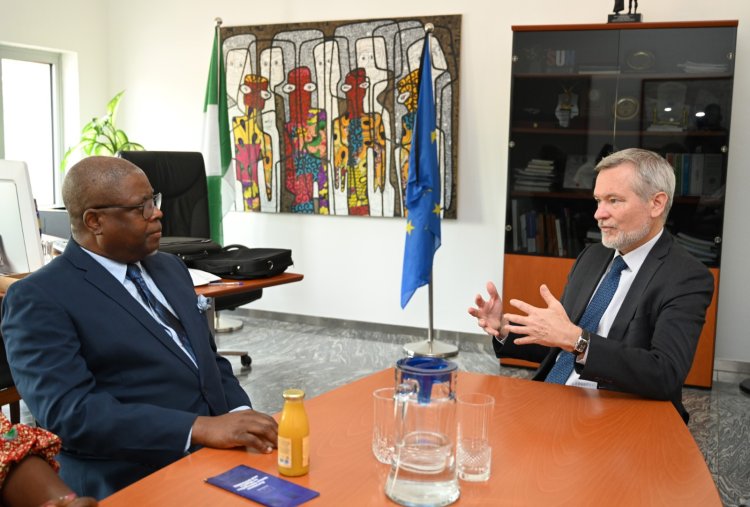
The Managing Director and Chief Executive Officer of NEPZA, Dr. Olufemi Ogunyemi, made the call on Monday at a trade and investment facilitation meeting held at the European House in Abuja.
In a statement released on February 9, 2026, by the Head of Corporate Communications of NEPZA, Dr. Martins Odeh, Dr. Ogunyemi said Nigeria’s Free Trade Zones provide strategic platforms for strengthening EU–Nigeria economic cooperation at a time of major global economic realignment.
“It is a privilege to address this distinguished gathering at this critical moment in global economic history. Our discussion today examines how Nigeria’s Free Zones, under NEPZA’s strategic framework, can serve as effective platforms to enhance EU–Nigeria economic cooperation amid significant structural change,” he said.
Dr. Ogunyemi noted that as the global economic order shifts away from a predictable, rules-based system towards one shaped by new alliances and economic pressures, the European Union should increasingly leverage Nigeria’s SEZs to expand and deepen its partnership with Africa’s largest economy.
“We recognise how EU leaders have articulated a vision of European independence and economic strength rooted in diversified, resilient and strategically aligned partnerships, rather than reliance on a narrow set of global suppliers or geopolitical arrangements,” he added.
According to him, increased EU economic activity along Nigeria’s SEZ corridors would help reduce dependency risks, safeguard critical supply chains and stimulate economic engagement across fast-growing regions of West Africa.
The NEPZA boss further observed that recent efforts by the EU to realign its economy underscore the need for mutually beneficial partnerships between Europe and Africa, stressing that Special Economic Zones offer a practical pathway to accelerate shared economic gains.
While acknowledging that the EU remains Africa’s leading trade and investment partner, with trade in goods between both continents nearing €355 billion in 2024 and services trade exceeding €100 billion, Dr. Ogunyemi warned that the dominance of raw material exports from Africa remains a major strategic challenge.
“Overreliance on primary commodities without meaningful value addition hinders industrial growth, limits human capital development and threatens the long-term sustainability of supply chains between Africa and the EU,” he said, adding that targeted investment in Nigeria’s economic zones could help address these imbalances.
The meeting was attended by ambassadors of European nations, heads of delegation of EU member states, as well as representatives of the European Commission and the European External Action Service.