FAAC: Federal, State, LGs Share N1.969 Trillion For December 2025
By Tony Enokela
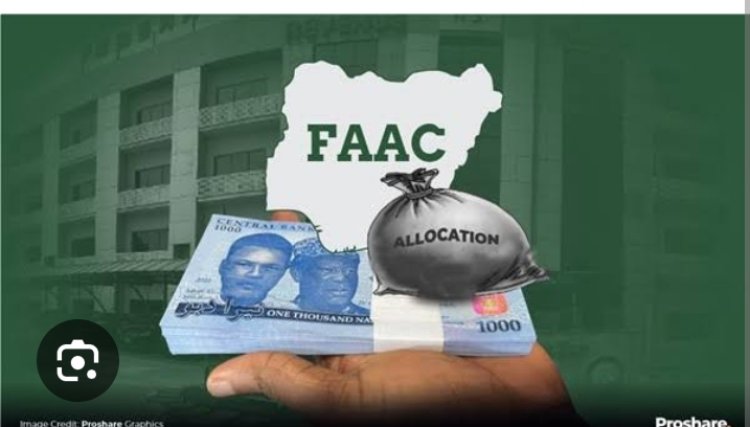
Federal Government, States, and Local Government Councils have shared a total of N1.969 trillion as the Federation Account revenue for December 2025, signaling a return to consensus at the monthly FAAC meeting.
The allocation was concluded during the January 2026 Federation Account Allocation Committee (FAAC) meeting in Abuja, following the resolution of disputes that delayed the previous sitting.
Disagreement had centred on transparency of inflows from key revenue-generating agencies and rising deductions, which prompted a temporary deadlock between the federal and some state governments.
According to the FAAC communiqué, the N1.969 trillion distributable revenue comprised: N1.084 trillion in statutory revenue, N846.507 billion from Value Added Tax (VAT), and N38.110 billion from the Electronic Money Transfer Levy (EMTL).
Gross revenue for the month stood at N2.585 trillion, from which N104.697 billion was deducted as cost of collection, while N511.585 billion went into transfers, refunds, and savings.
The allocation breakdown indicates Federal Government got N653.500 billion, State Governments N706.469 billion, Local Government Councils N513.272 billion while Oil-producing states (13% derivation revenue) is N96.083 billion.
In terms of statutory revenue Federal Government received N520.807 billion, States received N264.160 billion and Local Governments received N203.656 billion.
From the VAT pool of N846.507 billion the Federal Government received N126.976 billion, States received N423.254 billion and Local Governments received N296.277 billion.
FAAC noted a significant increase in VAT, Companies Income Tax, Import Duty, and Stamp Duties, while Petroleum Profit Tax, Hydrocarbon Tax, and EMTL recorded declines.
The allocation is expected to ease fiscal pressures on states and local governments, many of which depend heavily on FAAC inflows to meet salaries and fund development projects.
With consensus restored, stakeholders are now turning attention to revenue sustainability and transparency, as sub-national governments continue to grapple with rising costs and limited internally generated revenue.