Electricity Subsidy May Hit N2trn As FG Rules Out Tariff Hike
By Victor Idajili
The Federal Government may spend about N2 trillion on electricity subsidy this year as it insists there is no immediate plan to increase tariffs.
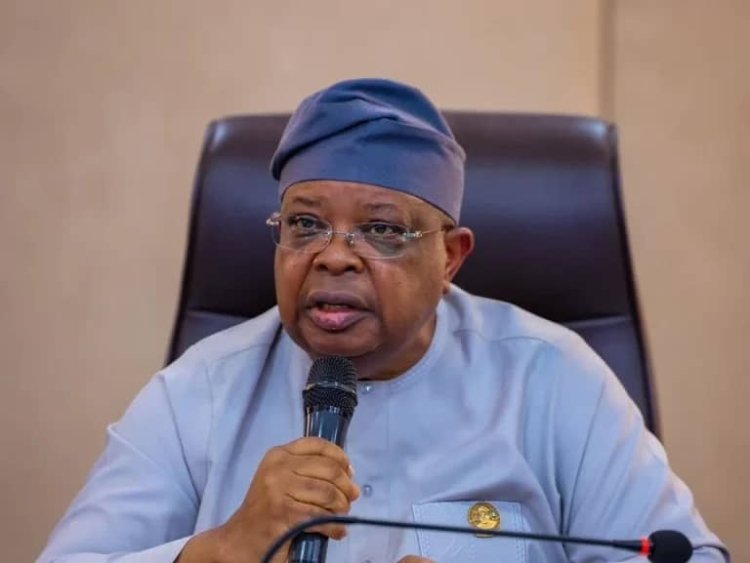
Minister of Power, Joseph Tegbe, stated this at a media briefing in Abuja on Monday to mark his first 100 days in office.
“There are no immediate plans to increase electricity tariffs. Our goal is to build a commercially viable power sector while protecting vulnerable consumers,” Tegbe said.
The Minister’s position comes after the Federal Government incurred N1.93 trillion as electricity subsidy in 2025, according to the Nigerian Electricity Regulatory Commission (NERC) 2025 Annual Report.
NERC said the subsidy, which represents 57.44 percent of the total Nigerian Bulk Electricity Trading (NBET) invoice for the year and averages N160.69 billion monthly, was incurred because approved tariffs remained below cost-reflective levels.
“In the absence of cost-reflective tariffs, the government undertakes to cover the resultant gap between the cost-reflective and allowed tariff in the form of tariff subsidies,” the commission said.
With tariffs still frozen, industry experts say the subsidy bill for 2026 could again hover around N2 trillion, as it did in 2024 and 2025, despite the Band A to E tariff classification introduced in 2024 that made only Band A customers pay cost-reflective rates.
Meanwhile, power generation companies have questioned the effectiveness of the Federal Government’s N4 trillion Presidential Power Sector Debt Reduction Programme, warning that fresh liabilities of over N7 trillion could pile up before the programme is fully implemented.
The Association of Power Generation Companies (APGC) said although it is not opposed to raising bonds to clear outstanding debts, the move will not solve the liquidity crisis in the Nigerian Electricity Supply Industry (NESI) as debts continue to mount monthly.
“Every month, the DisCos are not paying 100 per cent. NBET is not paying 100 per cent. The N4 trillion legacy debt is until December 2024. So, how about the accumulation for 2025? And what is already accumulated for 2026? So by the time you finish issuing this N4 trillion bond over seven years, by 2033, two times what you’re going to pay would have accumulated. So what is your plan?” APGC Chief Executive, Dr Joy Ogaji, queried.
Ogaji argued that the subsidy arrangement exists only on paper, as there is no budgetary provision for it.
“It’s only on paper that the government is subsidising power. It’s not in the budget. There is no monetary provision anywhere for subsidies, not even in the supplementary budget; it’s nowhere,” she said.
She urged the government to define the level of subsidy it can afford and make provision for it, rather than continue with a blanket subsidy that fuels debts across the value chain.
Tegbe, however, said the administration is addressing long-standing challenges in the sector, including debt, revenue leakages, metering gaps and infrastructure constraints.
He said his first 100 days, from June 8 to September 16, were focused on diagnosing problems across the value chain, stabilising infrastructure and restoring market discipline.
According to him, gas supply to power plants was constrained by damaged pipelines and unfavourable commercial terms, while ageing equipment, poor maintenance and stalled projects prevented available capacity from reaching consumers. He added that generation companies received only 27 percent of their invoices, undermining their ability to maintain plants and pay gas suppliers.
NERC explained that under the subsidy regime, government covers the difference between cost-reflective and allowed tariffs by paying the shortfall in generation cost payable by DisCos to NBET, through the Federal Ministry of Finance.
The framework, it said, was introduced to prevent unpaid subsidy debts from accumulating on DisCos’ balance sheets and limiting their ability to raise funds for network investments.
Analysts say retaining tariffs below cost means government will continue to bear a huge cost of electricity supply while working to improve collections, gas supply, infrastructure and service delivery.